
Why Champagne Cork Selection Matters for Wine Quality and Celebration
When it comes to champagne, the cork is essential. Without it, champagne would not be what it is today. The cork’s quality and material directly affect how long your wine stays fresh, how its flavor develops, and whether it’s ready to celebrate. In this article, we will explore the different types of champagne corks and their advantages, analyzing how each closure impacts taste, aging potential, and your celebration experience.
Which type of cork is best suited to your champagne? What are the advantages and disadvantages of each closure type? Here is a complete guide to help you choose the best cork for your wine. So, are you ready to discover the different types of champagne corks and their benefits?
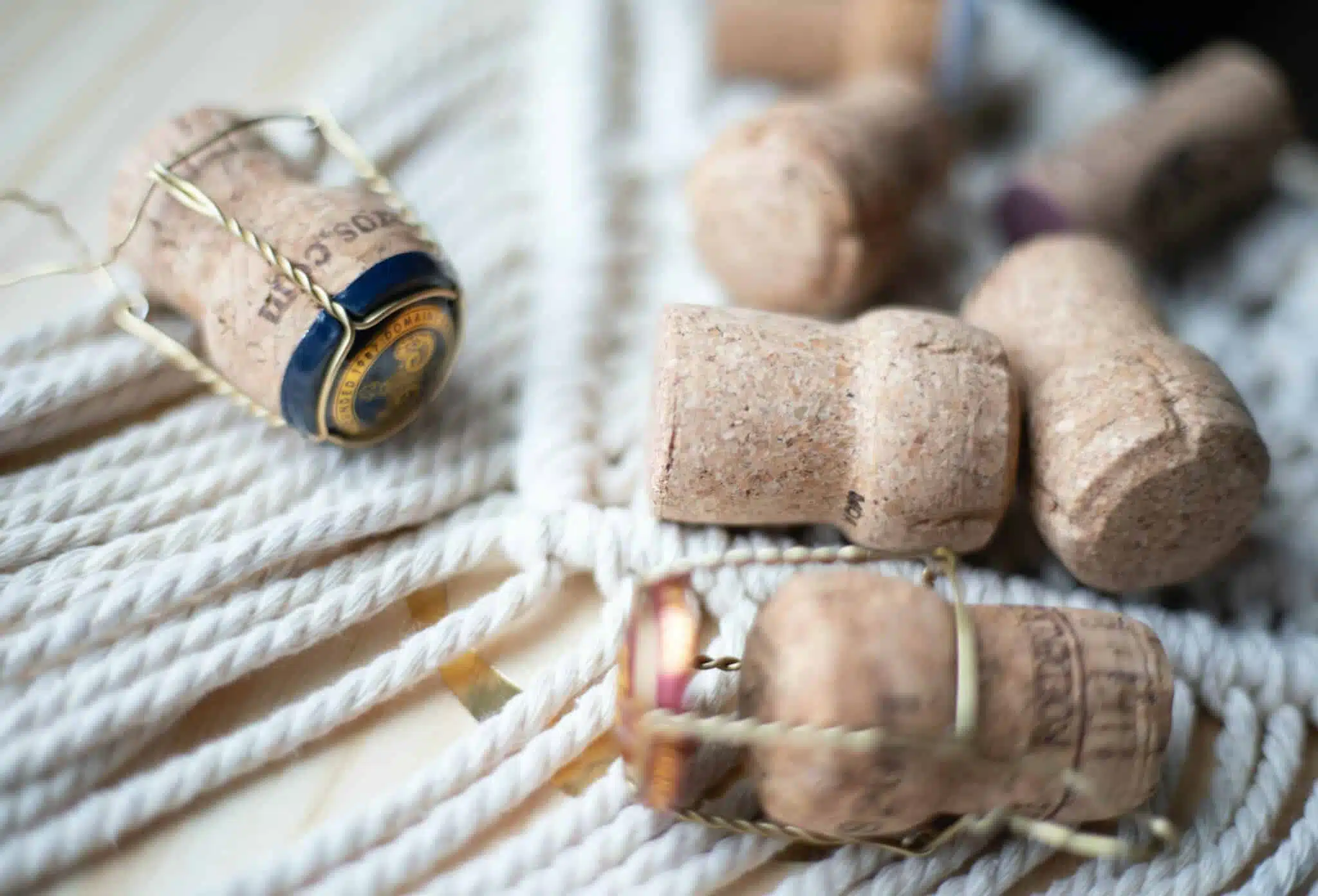
Types of Champagne Cork and Key Differences Between Closures
Champagne is one of the most popular drinks in the world. But did you know that there are different types of corks for this drink? In this article, we will focus on the different types of champagne corks and their benefits.
Regarding the different types of stoppers, there are essentially three main cork materials: natural cork, agglomerated cork, and synthetic cork. Each type of closure has distinct advantages and disadvantages. Let’s examine the different types of corks and their specific advantages.
Natural cork is the most popular and most used type of stopper for champagne. It is considered the best choice for wines meant to age because it offers exceptional protection and preserves the taste and aroma of the champagne. Natural corks are tighter, meaning they are more effective at keeping air and other contaminants from getting into the champagne. More importantly, natural cork allows a small amount of oxygen to diffuse through over time, which encourages subtle flavor development such as buttery or nutty notes in wines meant to evolve.
Agglomerated cork balances consistency and price, offering reliable sealing for mid-range bottles. It provides good protection while being more affordable than solid natural cork, making it a popular choice for non-vintage champagnes.
Synthetic cork provides a perfect airtight seal, eliminating cork-taint risk entirely and preserving fruitiness and bottle-to-bottle consistency for fresh, vibrant styles. Synthetic closures excel at keeping the wine completely sealed, making them ideal for champagnes meant to be enjoyed young rather than aged.
Natural Cork Advantages: Micro-Oxygenation and Aging Potential
The natural cork stopper is the oldest and most traditional closure for champagne. It is often used to seal champagne bottles, as it offers various advantages.
The first advantage of the natural cork stopper is that it provides an excellent seal. It is designed to fit snugly in the bottle and prevent air from entering. This keeps the champagne in good condition for longer and prevents the bubbles from escaping. The cork sits inside the neck together with the wire hood (muselet), creating an airtight seal that holds 5-6 bar of pressure.
The natural cork stopper is also very sturdy and durable. It can withstand internal pressures up to 6 bar (or 6 atmospheres). This ability to resist pressure, combined with a good seal, ensures excellent protection of the champagne. According to the traditional method used for Champagne, after the second fermentation and disgorgement the wine is topped up with a dosage and then sealed with a natural cork, which is held in place by a wire cage (muselet).
The key distinction of natural cork is its ability to allow controlled oxygen ingress. This micro-oxygenation can enhance complexity in wines that benefit from gentle aging, such as those developing buttery or nutty flavors over months or years. Winemakers often produce parallel batches sealed with both cork and crown cap to compare flavor evolution and textural differences.
Furthermore, the natural cork stopper is very practical to use. It is easy to open and close and requires no special tools. It is therefore ideal for opening champagne bottles safely and effortlessly.
Finally, the natural cork stopper is generally affordable and easy to find. It is widely available online, in specialty stores, and in many general stores, making it an accessible option for most consumers.
Synthetic Cork and Mechanical Stoppers: Airtight Sealing for Fresh Wine Tastes
Synthetic cork is an increasingly popular alternative to traditional natural cork, offering several distinct benefits that make it very valuable for specific wine styles.
One of the main advantages of synthetic cork is its ability to maintain a perfectly airtight seal. Synthetic closures are designed to be completely airtight and to seal against air and moisture. This means the champagne will stay fresher and maintain its effervescence for longer. Crown caps provide a perfect airtight seal during secondary fermentation, preserving fruitiness and ensuring bottle-to-bottle consistency for fresh, vibrant styles.
Another advantage of synthetic cork is its complete elimination of cork-taint risk. Unlike natural corks, which can carry microbial contamination and variability, synthetic corks eliminate these inconsistencies entirely. This makes them ideal for producers seeking reliable, consistent results.
Synthetic cork is also easier to remove compared to natural corks, which can be difficult and sometimes break apart. Synthetic corks can be removed effortlessly and without risk of fragments.
Finally, synthetic cork is also more economical than natural cork in many cases. While natural corks are expensive to produce and can be hard to source in high volumes, synthetic closures offer affordability and consistent availability.
Choosing Your Cork: Matching Closure Type to Wine Style and Storage Conditions
Selecting the best champagne cork depends on several critical factors related to your wine style and intended drinking window.
Match cork material to wine style: Vintage Champagnes favor natural cork for aging and complexity development, allowing micro-oxygenation to encourage buttery and nutty nuances. Non-vintage bottles often use synthetic cork for consistency and to preserve fresh fruit character. Budget influences choice: premium brands invest in high-quality natural corks, while value brands may opt for agglomerated options.
Consider storage conditions: Natural cork tolerates long-term cellar environments and temperature fluctuations better than some synthetics. Synthetic closures excel in consistent, cold storage. Assess pressure resistance; both closures must withstand 5-6 bar, but corks rely on the muselet for extra security.
Plan for post-opening preservation: Cork-sealed bottles benefit from resealing tools that replicate the original pressure. The metal capsule that wraps a bottle’s neck works together with the twisted wire muselet to lock the cork in place, creating an airtight double-seal. This seal not only protects the wine from oxidation and signals any tampering, but the capsule’s condition also reveals whether the bottle has been stored properly. Modern preservation tools imitate this capsule- cork system to keep champagne cork seal integrity long after opening.
Preserving Opened Champagne: Cork’s Role and Modern Preservation Tools
The Bubbl system offers a modern way to preserve opened champagne by using a smart cap that regulates pressure and injects a CO₂-nitrogen blend to keep bubbles and aromas intact for up to a week. Its elegant packaging is made from upcycled cork, turning the traditional symbol of celebration into a sustainable material while maintaining a hermetic seal that prevents oxidation. This innovative approach highlights how the classic champagne cork, long associated with festivity and quality, can be reimagined to protect the wine‘s freshness long after the bottle is first opened.
Keeping champagne’s characteristic fizz after the cork is removed relies on maintaining proper pressure and limiting oxygen exposure. While traditional stoppers can preserve bubbles for only a day or two, the Coravin Sparkling preservation system uses a reusable stopper paired with CO₂/N₂ capsules to reseal the bottle and restore pressure, extending freshness for up to a week—or even several weeks in lab tests—when stored refrigerated. This technology demonstrates how a well-designed resealing method can protect the wine’s effervescence, complementing the traditional cork‘s role in preserving the wine‘s quality. See sparkling wine preservation for more details on advanced resealing options.
The Symbolism and Celebration Tradition of Champagne Corks
Popping a cork has long been the universal signal to celebrate and begin festivities. The dramatic pop confirms that carbonation and pressure are intact, signaling a well-preserved bottle. This moment is traditionally seen as a signal to begin celebrations, often accompanied by cheering and a toast.
After the cork is popped and the champagne is enjoyed, many people keep the cork as a good luck charm or souvenir of the occasion. In some European traditions, a small coin is placed under the cork before sealing—a custom believed to bring prosperity and symbolizing wealth and enduring celebration. Some even believe it is lucky when a champagne cork lands upright in the bottle after resealing, thought to bring good fortune to the host and guests.
The ceremonial aspect of cork removal adds meaning to special occasions. Formal events frequently include a brief ceremony where the host removes the foil and cage, letting the cork pop in view of the audience. This ritual of sharing the first sip after the cork is popped is linked to bonding and the strengthening of relationships, making the cork central to wedding celebrations, parties, and moments of shared happiness.
Conclusion
Choosing the best champagne cork depends on your wine style and intended drinking window. Natural cork is ideal for vintage Champagnes meant to develop complexity over months or years through controlled oxygen diffusion. Synthetic cork excels at maintaining freshness and consistency for non-vintage bottles enjoyed young.
After opening, modern preservation tools can extend a bottle’s life by recreating the pressure environment the original cork and muselet maintained. Whether you’re celebrating with an opened bottle or storing a sealed one, understanding your cork’s role—in both preserving the wine and marking the occasion—helps you make the most of every glass of champagne.