
Table of Contents
- Looking for the best wine dispenser to serve wine by the glass?
- What is a wine dispenser and how does serving wine by the glass work?
- Different types of wine dispenser for serving wine by the glass
- Visit the Wikeeps boutique now
- How does a wine dispenser work and preserve wine?
- What are the advantages of a wine dispenser for wine by the glass?
- What are the disadvantages of wine dispenser systems?
- Conclusion
- Frequently Asked Questions
Looking for the best wine dispenser to serve wine by the glass?
Wine dispenser systems and by-the-glass machines offer a range of features and functions to suit different needs, from pressure-based service to temperature-controlled storage.
This article explains what a wine dispenser machine is, the main types of by-the-glass systems, how wine preservation technology works, and the advantages and limitations of using a dispenser.
A wine dispenser machine is a practical solution for wine service. It serves wine at the correct temperature and in the right portion size while preserving aromas and flavours, whether in a restaurant, a bar or at home.
These machines are designed for straightforward installation, maintenance and daily use. As a result, they help keep wine in ideal condition and support consistent service from the first pour to the last.
What is a wine dispenser and how does serving wine by the glass work?
Wine dispensers are specialised devices that keep wine at low temperatures whilst preventing oxygen ingress, allowing bars and restaurants to serve wine by the glass without spoilage. They also regulate the volume poured, which reduces over-pouring and ensures consistent servings.
In a gas-preservation system, gas enters the bottle as wine is poured, taking the place of the dispensed wine. Inert-gas dispensers use argon or nitrogen for this purpose, protecting the wine from oxygen and limiting oxidation. Dispensers with a dosing function go further: they control the quantity poured for each serving.
They have become increasingly popular in recent years because they allow restaurants and bars to offer wine by the glass without the limitations of traditional open-bottle service. This model has reshaped wine retail and hospitality operations globally.
Wine dispenser machines are available in different types and capacities. They may be pressurised or direct-draw systems, with or without cooling, and with or without automation: the choice depends on service volume, preservation needs and operational preference.
Pressurised wine dispensers are the most common and can serve multiple glasses efficiently. Conversely, direct-draw wine machines are generally smaller and suited to lower-volume service.
Wine dispenser machines with cooling systems are particularly well suited to white and rosé wines, as they maintain the correct temperature and help preserve freshness and aromatic precision. Models with temperature control and digital displays add further convenience by allowing the selection of wine type, quantity and serving temperature.
These machines offer several practical advantages. They are generally simple to operate, easy to install and efficient to maintain, while reducing waste and improving portion control, where preservation meets precision.
They are also versatile enough to serve different types of wine and brands at the same time. That flexibility can support a broader by-the-glass list without increasing spoilage risk.
There are, however, some limitations to consider. The primary concern is the initial investment, and certain systems may require specialised maintenance, particularly if installation has not been carried out properly.
Some machines can also be less convenient when switching between bottles or managing service speed. Once a bottle is opened, preservation quality depends heavily on the gas system used, although modern dispensers using argon or argon and CO₂ blends are highly effective at limiting oxidation.
Different types of wine dispenser for serving wine by the glass
Wine dispenser machines come in several formats, each with its own features and service advantages. Here is an overview of the main types of dispensers available on the market, from simpler options for small wine bars or restaurants to more complex systems for larger establishments.
Pressure service system
A pressure service system is a by-the-glass dispenser that uses pressure generated by an air pump or inert gas to serve the wine. This format remains popular because it is easy to install and straightforward to use. In practice, it allows wine to be served at any time without requiring complex infrastructure.
Temperature-controlled service system
This wine dispenser system is designed to maintain the wine at a stable and suitable temperature during service. It is particularly well suited to bars and restaurants serving wines at different temperatures: typical service ranges span from 3 to 18°C for accurate by-the-glass presentation.
Cold storage system
This wine dispenser unit is designed to store wine at a constant temperature in order to preserve its flavours and aromas. The temperature can be adjusted, and wine may be stored between 4 and 18°C, making the system suitable for a wide range of wine styles.
Automated and manual service systems
Automated bottling and serving systems are ideal for high-volume bars and restaurants, allowing bottles to be filled cleanly and wine to be served with consistency. Conversely, manual systems require direct human intervention and are typically used in smaller establishments. Both approaches support controlled dispensing and precise portioning.
Drip service system
This wine dispenser system is designed to pour wine in precise, delicate quantities, allowing subtle and complex wines to be served with care. It is often favoured by sommeliers and wine professionals who prioritise precision and proper aeration.
Other interesting article: The temperature of wine… this summer
Visit the Wikeeps boutique now
How does a wine dispenser work and preserve wine?
Wine dispenser systems rely on controlled pressurisation and inert gas preservation. In practice, they use small metal cylinders or cartridges filled with a food-grade argon and CO₂ blend to create a protective atmosphere inside the bottle. This keeps the wine under stable pressure and at a consistent temperature for an extended period. Once the bottle is opened, the wine can be served on demand while the inert gas helps prevent oxidation.
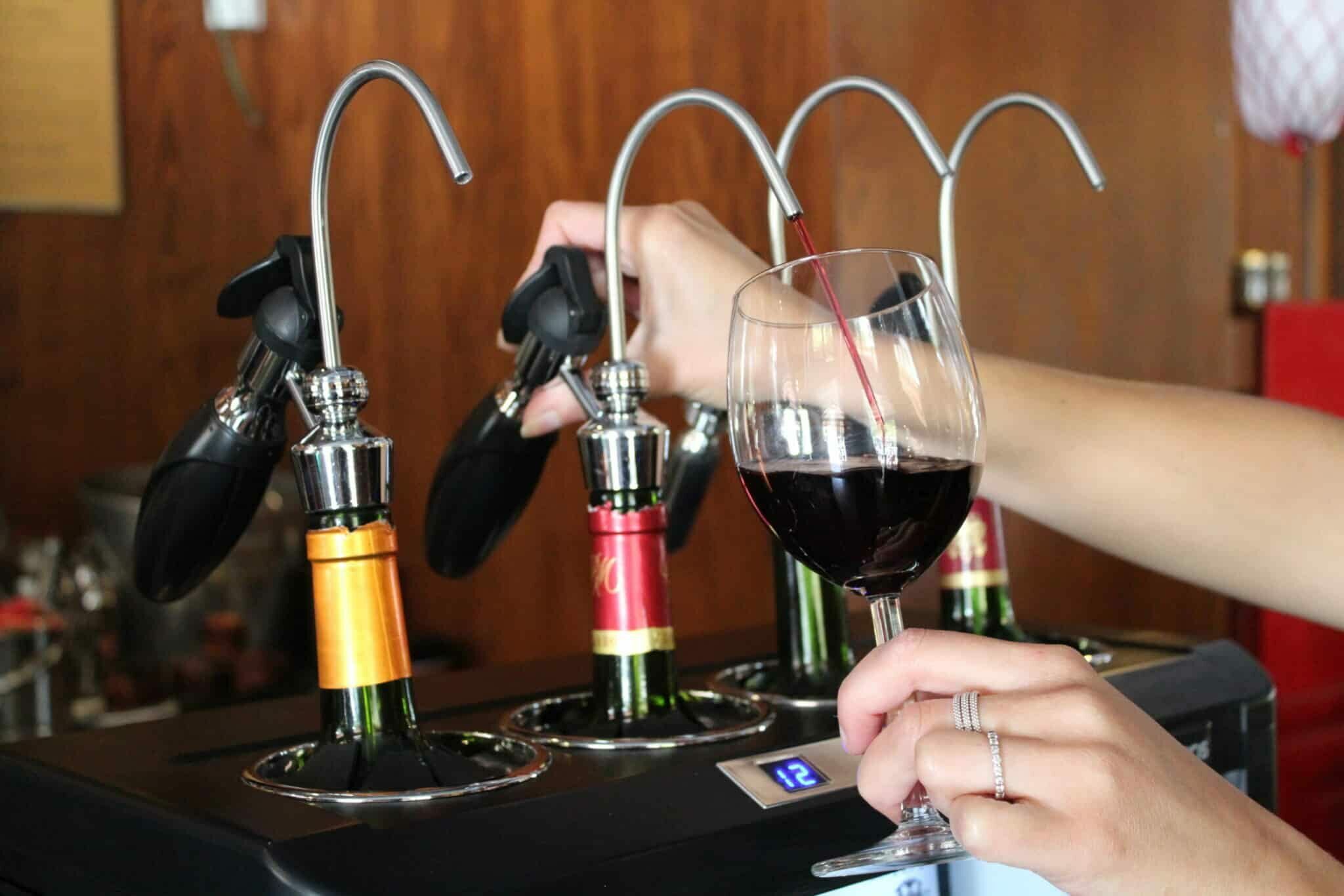
Wikeeps is a portable wine dispensing machine: it serves wine while the opened bottle stays preserved, and it works with all bottle formats. The Wikeeps Additional Service Box extends this dispenser so several bottles can be served by the glass while each one remains protected by a neutral argon-CO₂ mix. The modular kit works with the original dispensing gun and includes additional caps, preservative plugs, a magnum extension, and an Elite stainless-steel tap and spout: all designed for smooth switching between bottles. As a result, the wine’s aromas and flavours can remain intact for up to 30 days after opening, making it a strong option for both enthusiasts and professionals seeking reliable by-the-glass wine dispensing.
Wine dispenser systems may be controlled manually or automatically. Manual models are generally fitted with a control panel that allows the user to choose the type and quantity of wine to be served. Conversely, automatic systems use sensors to identify the wine and adjust the pressure accordingly.
A typical wine dispenser includes a gas cartridge or pressurisation system that keeps the bottle under controlled pressure. This system connects through hoses to a dispensing tap and storage area, allowing several bottles to be served from a single unit. Those hoses need regular cleaning, since residues left inside can contaminate the next wine, a hygiene principle also found in the OIV good practices guide for bulk wine transportation.
During service, the wine is dispensed through a regulated mechanism that controls both pressure and flow rate. Each glass receives a measured serving while inert gas continues to preserve wine left in the bottle. Oxidation is therefore limited, and aroma and flavour remain more faithful to the original profile.
Wine dispenser machines offer a practical way to serve and preserve wine at the right temperature and pressure for consistent results. They suit both commercial settings and home use with equal relevance.
What are the advantages of a wine dispenser for wine by the glass?
The advantages of using a wine-by-the-glass machine are substantial. Here are the most important benefits this technology can bring to a restaurant, wine bar, hotel or tasting space.
Time saving: The time needed to serve a glass of wine is noticeably reduced with a wine dispenser system, which also speeds up service during busy periods. Staff can then devote more attention to taking orders and advising guests, improving both the customer experience and the overall efficiency of the venue.
Wine preservation and reduced waste: A dispenser is designed to protect wine quality while limiting loss. Once opened, each glass retains its original aromas and flavour far more consistently than wine poured from a bottle left exposed to air, so less wine is discarded before it can be served. The difference comes down to wine dispenser technology: inert gas slows oxidation and helps keep wine fresh for up to 30 days after opening.
Cost savings and profitability: Lower waste, lighter service pressure and quicker pouring all support stronger margins. Precisely measured pours also help a business control its serving quantities and avoid over-pouring. As a result, establishments can expand their by-the-glass selection without relying on rapid bottle turnover, which makes premium references easier to offer and to manage commercially.
Improved inventory management: Stock control becomes more reliable because wine is poured on demand and preserved between services. Spoilage is reduced, and preserving several opened bottles at once lets a venue list a wider range of wines by the glass.
Enhanced service quality: Precise portion control and service at the correct temperature support a more professional presentation. Small measured pours also let customers enjoy tasting different wines, while staff focus more on the guest and less on bottle management.
For venues looking to begin by-the-glass service, the essential kit from Wikeeps includes the core components required to pour and preserve wine properly.
At home, the same logic applies on a smaller scale. A home dispenser, such as a countertop model, gives access to several opened bottles at once: a choice of glasses for a dinner party, or small pours from one bottle over several days or weeks.
Ultimately, a wine dispenser system improves service while reducing avoidable costs. It is the right choice when an establishment wants to serve quality wines by the glass with greater consistency, control and confidence.
What are the disadvantages of wine dispenser systems?
Wine dispenser systems are sophisticated devices designed to store and serve wine at ideal temperatures. They are widely used by restaurants, bars and wine enthusiasts. Like any specialised equipment, they come with limitations that merit careful consideration.
The primary drawback is the initial investment cost. Wine dispensing systems represent a significant capital expense and require proper installation, along with ongoing maintenance expertise. Additionally, some machines are less intuitive to operate than traditional service methods.
Modern wine dispenser systems that use argon and CO₂ preservation technology maintain wine quality effectively. Conversely, older pressure-only systems may not preserve wine with the same consistency. Systems with proper gas-based technology are far better equipped to protect the wine from oxidation and quality loss.
For home use, space is another constraint: some systems need counter space and room for a gas cylinder. Extended preservation also matters less in a household that finishes its opened bottles quickly.
Conclusion
Wine dispenser systems offer a convenient and economical solution for serving wine by the glass in restaurants, bars and homes. There are several types of dispenser machines, each with distinct features and preservation capabilities suited to different service models.
Modern systems using inert gas preservation provide a safer and more hygienic serving method than traditional open-bottle service, while preserving wine quality, aroma and flavour more effectively. They can also reduce service time and ease staff workload. Proper system selection, installation and maintenance training remain essential for consistent performance.
When selecting a system, the number of bottles it holds should match the volume of wine served, and its size must fit the space available. Ease of use matters for staff and, in self-service set-ups, for customers. Compressor-based cooling tends to hold temperatures more consistently in warmer environments, while compact countertop models holding six bottles suit venues where space is limited.
To summarise, here are the main points to remember:
- Wine dispenser systems provide convenient, economical by-the-glass service with strong wine preservation.
- Gas-based systems using argon and CO₂ help prevent oxidation and maintain quality.
- Temperature-controlled dispenser machines can serve multiple wine styles simultaneously.
- Proper selection, installation and training support long-term value and reliable performance.
Quality wine service begins with proper preservation, from the first pour to the last.
Frequently Asked Questions
How long can a wine dispenser preserve an open bottle?
Modern wine dispenser systems using argon and CO₂ can keep wine fresh for up to 30 days after opening. The inert gas creates a protective atmosphere that limits oxidation and preserves aroma and flavour. Preservation time also depends on proper maintenance, accurate temperature control and the style of wine. Red wines often keep slightly longer than whites because of their composition.
What is the best wine dispenser system for restaurants and bars?
It depends on the service model and the wines offered. For commercial venues pouring whites and reds together, a dual-zone wine fridge from Wikeeps offers two independent compartments, a digital display and room for six standard bottles. Pressure-service systems with gas-based preservation, stainless-steel construction and modular designs also let the installation grow with demand.
What are the key features to consider when choosing a wine dispenser?
Assess preservation technology, temperature control, capacity, cooling, ease of maintenance and bottle compatibility. Argon or CO₂ systems protect better against oxidation than pressure-only designs, and models operating between 3 and 18°C offer broader flexibility. Modern wine dispenser technology now combines inert gas protection with by-the-glass service for both professional and domestic settings.