
Table of Contents
- Why restaurants choose wine preservation systems to keep opened bottles fresh
- Evolution of wine preservation: from vacuum systems to inert gas technology
- Wine preservation systems: comparing protection methods and preservation duration
- Wikeeps wine preservation system: argon and CO₂ gas technology for restaurants
- Wine preservation and dispensing systems for restaurants: serving fresh wine by the glass
- Sparkling wine preservation systems: maintaining bubbles and quality
- Wine dispenser and preservation systems: technology for bars and hotels
- Frequently Asked Questions
Why restaurants choose wine preservation systems to keep opened bottles fresh
Once a bottle has been opened, the wine remains safe to drink for a time. Even so, there are many situations in which professional wine preservation equipment is worth considering. The challenge of keeping wine fresh after opening arises in both domestic and professional hospitality settings, including restaurants, bars, and hotels. Understanding the different types of wine preservation and how to preserve multiple bottles effectively helps reduce waste and maintain the character of quality wines.
How wine preservation systems extend freshness and prevent oxidation in opened bottles
At the end of a successful evening service, one situation appears again and again: a very good bottle has been opened, only half has been served, and the rest now needs protection. Once opened, the question is no longer whether the wine is drinkable, but how long it can retain its balance and aromatics. In practice, that depends on how well oxygen exposure is controlled from the first pour to the last.
Types of wine preservation systems and stoppers for open bottles
As soon as a bottle is opened, oxidation begins through contact with air. Different wine preservation systems address this in different ways: vacuum sealing reduces the amount of oxygen in the neck of the bottle, inert gas systems such as argon create a protective layer above the wine, and specialised stoppers limit further air exchange. The difference comes down to the level of protection required, with results ranging from a few days to several weeks. Argon-based wine preservation systems are often the right choice when restaurants and wine bars need to preserve premium bottles in service.
Vacuum pumps and refrigeration: traditional wine preservation methods
Vacuum stoppers work by extracting excess air from the bottle and creating a tighter seal, which slows oxidation. These manual systems generally keep still wines in sound condition for 3 to 7 days. Refrigeration also plays a clear role: 8–12°C for whites and 15–18°C for reds helps slow the wine’s evolution once opened. Conversely, vacuum pumps are not suitable for sparkling wines because they remove carbonation along with oxygen.
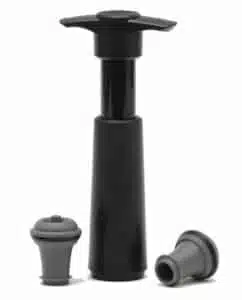
Keeping wine fresh: extending the life of opened bottles with proper storage
Red wines often remain drinkable longer than whites or sparkling wines after opening because of their tannin and acidity profile. To limit oxygen contact and preserve wine quality, store the bottle upright after pouring and keep it in a cool place away from direct light. The type of closure matters as well: screw caps and natural corks do not behave in exactly the same way once reopened, affecting how long your wine stays fresh.
For bottles intended to be enjoyed over several days, advanced wine preservation systems using inert gas offer a more reliable solution. As a result, restaurants and private collectors alike can serve wine over time without sacrificing precision in the glass. This is where Wikeeps stands out, where preservation meets precision.
Evolution of preservation: from vacuum systems to inert gas technology
Traditional approaches to keeping wine fresh relied on simple refrigeration, which generally limited freshness to 2 to 3 days. Early pump-based vacuum systems brought only modest improvement, extending the life of an opened bottle by another day or two. For restaurants and wine bars serving premium wines by the glass, those basic methods quickly proved inadequate.
Technological progress then shifted wine preservation into a different category. The first air pumps for wine bottles did extend shelf life slightly, yet that remained far too limited for professionals in restaurants, hotels, and the wider wine trade who must ensure that wines listed and served by the glass stay fresh and expressive for several weeks. The difference comes down to oxygen management: modern wine preservation systems using inert gas technology can keep opened bottles fresh for 2 to 4 weeks, or longer depending on the system.
Preservation systems: comparing protection methods and preservation duration
Preservation systems protect opened bottles either by removing oxygen or by displacing it, which extends freshness from a few days to several months. Inert-gas solutions, such as argon and CO₂ cartridges, create a protective blanket over the wine and can keep still wines fresh for up to four weeks. Conversely, needle-based devices such as Coravin replace the volume poured with argon, preserving flavour and structure for months.
Vacuum pumps remain a lower-cost option for occasional use, although they generally preserve wine for only 3 to 7 days and cannot maintain carbonation. The same logic applies to sparkling wines, but with a specific requirement: specialised tools use CO₂ injection or pressure-resistant stoppers to retain bubbles for several days. In practice, the right system depends on drinking habits, bottle type, and the length of preservation required.
The Wikeeps Essential Kit is designed as a complete preservation solution for professional service. It combines a dispenser gun, a stainless-steel spout, a filter, and preservative caps with a French-patented inert gas blend of argon and CO₂ injected at each pour. From the first pour to the last, that neutral atmosphere protects opened bottles from oxidation and helps preserve aromas and flavours for up to one month.
Explore the Wikeeps wine preservation system to match the level of protection and service precision needed.
Wikeeps system: argon and CO₂ gas technology for restaurants
Wikeeps wine preservation and by-the-glass dispensing systems preserve opened bottles for up to 20 days under typical restaurant conditions, with some applications extending to 30 days in lighter-use settings. The system uses a proprietary inert gas blend of argon and CO₂ that creates a protective blanket over the remaining wine, preventing oxidation.
The Wikeeps system features a precision-engineered dispenser with a stainless-steel spout that maintains the protective gas layer during pouring. The trigger-operated mechanism serves wine in a single fluid motion and encourages natural aeration through the Bernoulli principle. After pouring, a Smart Cap seals the bottle with an integrated protective gas layer, blocking oxygen ingress and preserving the remaining wine in optimal condition, where preservation meets precision.

Wine preservation and dispensing systems for restaurants: serving fresh wine by the glass
A wine preservation and by-the-glass dispensing system follows a simple three-step process: assembly, placement on the bottle, then dispensing and sealing. This extends the life of opened wine for up to 20 days. Its cartridges are compatible with Coravin technology, allowing establishments to serve wine by the glass whilst maintaining quality, reducing waste, and supporting sales across restaurants, hotels, wineries, and wine shops. The French-patented wine preservation system enables restaurants to serve wine by the glass whilst keeping the remaining bottle fresh for weeks by inerting the opened bottle with a neutral gas and using a built-in filtration spout to prevent oxidation and limit sediment disturbance.
The Wikeeps wine preservation system is particularly well suited to hospitality because it combines extended preservation with practical service features. Unlike standard vacuum systems or basic stoppers, Wikeeps includes built-in fine-mesh filtration that captures sediment from aged wines during pouring. The difference comes down to control: restaurants and wine bars can offer premium wines by the glass without the usual concern over waste, as opened bottles remain fresh for weeks.
- Preserves opened wine bottles for up to 20 to 30 days, extending preservation well beyond vacuum stoppers and traditional methods
- Filters sediment whilst dispensing, allowing premium and aged wines to be served by the glass
- Maintains consistent wine quality and taste across multiple pours from a single opened bottle
- Integrates optional temperature control with Wibox to store bottles at the ideal serving temperature
Restaurants, wine bars, and hotels using wine preservation systems report revenue increases of 10 to 30% by offering premium wine selections by the glass with greater confidence. Winemakers and tasting rooms also benefit from reduced waste when serving opened bottles whilst maintaining quality. In practice, the economic advantage lies in turning potential bottle loss into extended service opportunities, improving profitability while enhancing the guest experience.
Sparkling wine preservation systems: maintaining bubbles and quality
For sparkling wines and Champagne, dedicated preservation is essential, since standard vacuum or argon-only systems compromise carbonation. Sparkling wine preservation relies on CO₂ injection or pressure-resistant stoppers to maintain effervescence. The Sentinel is a portable professional sparkling wine preservation system that uses a refillable CO₂/N₂ canister and patented Smart Caps to protect opened bottles with inert gas.
Once opened, the challenge is no longer oxidation alone but pressure loss as well. As a result, the system can keep Champagne and other sparkling wines fresh for more than a week, preserving bubbles and aromatic definition. Sparkling wine preservation solutions from Wikeeps include spray guns, multiple caps, and optional temperature control, making them well suited to wine bars, restaurants, and oenotourism tastings, where preservation meets precision.
Wine dispenser and preservation systems: technology for bars and hotels
Wine dispensers are specialised systems designed to keep wine at a stable serving temperature whilst preventing oxygen from entering the bottle during pouring. This preserves flavour, extends shelf life, and supports accurate portion control, which helps reduce over-pouring and waste. In practice, these systems have become a practical fixture in restaurants, bars, and hotels where consistency in service matters as much as bottle management.
The principle itself is far from new. Wine preservation can be traced back to ancient Georgia around 6000 BCE, where sealed vessels allowed fermentation and storage under controlled conditions. The modern wine dispenser and preservation system is the direct technological extension of that same objective: protecting wine from premature spoilage while keeping it ready for service.
According to wine cellar management standards, professional training programmes cover the essentials of optimal storage: temperature, humidity, lighting, insulation, stock rotation, bottle-condition monitoring, preservation techniques, and digital inventory tools. The difference comes down to control, since each of these factors influences how reliably a wine reaches the glass in peak condition.
Complementary storage solutions such as the Wibox refrigeration system maintain opened bottles at the proper serving temperature: 8–12°C for whites and rosés, and 15–18°C for reds. From there, inert gas protection adds a second layer of preservation, limiting oxidation while keeping each bottle service-ready. This combined approach helps ensure that wine served through a preservation and dispensing system retains its intended character from the first pour to the last.
Frequently Asked Questions
What is the best wine preservation system for restaurants and bars?
The best wine preservation system for restaurants and bars depends on the wine list and the service model. For still wines in professional hospitality settings, inert gas systems such as Wikeeps offer extended preservation: typically up to 20 to 30 days, alongside practical by-the-glass service and integrated filtration for premium wines.
Conversely, for home use, vacuum stoppers remain an accessible option and generally preserve still wines for 3 to 7 days. For sparkling wines, specialised CO₂ systems are designed to maintain carbonation for more than a week.
Needle-access systems such as Coravin can preserve wine for several months, although cartridge costs are higher. In practice, the right choice comes down to five points: wine selection, frequency of use, budget, storage capacity, and whether service by the glass is required.
How long can opened wine stay fresh with different preservation systems?
Wine preservation time varies considerably depending on the system used and the way the bottle is stored. Vacuum stoppers generally keep still wine in good condition for 3 to 7 days when refrigerated.
From there, inert gas systems such as Wikeeps extend freshness to 2 to 4 weeks for still wines, and often up to 20 to 30 days with stable temperature control and limited handling. That makes them particularly suited to restaurants serving several open bottles at once, where preservation meets precision.
Needle-access systems such as Coravin can preserve wine for months when bottles are stored properly in a vertical position. Sparkling wines, however, require dedicated CO₂ systems to retain carbonation for 4 to 7 days or longer, depending on pressure retention and storage conditions.
What’s the difference between argon gas and vacuum wine preservers?
Vacuum wine preservers remove part of the air from the neck of the bottle to slow oxidation. This approach usually preserves still wine for 3 to 7 days, but it is not suitable for sparkling wines because it also reduces carbonation.
Argon gas systems work differently: they place a protective layer of inert gas above the remaining wine, limiting contact with oxygen and extending preservation to 2 to 4 weeks or more. The difference comes down to the method itself, as argon protects rather than extracts.
Once opened, premium wines often benefit more from argon-based preservation, especially in restaurants and bars where consistency matters from the first pour to the last. Vacuum systems remain appropriate for occasional home use and tighter budgets, while argon systems are the right choice when commercial service and longer preservation are priorities.