
Table of Contents
- Choosing a sparkling wine preservation system
- Bubbl. versus Coravin Sparkling for Champagne
- Pressure stopper choices as a low-cost Coravin alternative
- Why Vacu Vin is not a sparkling wine preservation system
- Capsules, Coravin compatibility and professional wine service
- Frequently Asked Questions
Finding the best alternatives to Coravin for sparkling wine preservation demands attention to pressure, closure design and gas retention. Not every tool is designed to handle carbonation pressure, and the wrong choice can flatten a fine bottle within hours. This guide examines options available in the UK, from pressure-resistant stoppers to gas-injection systems, so that each pour retains the wine’s intended character.
Choosing a sparkling wine preservation system
An opened bottle of sparkling wine presents a specific technical problem. Dissolved carbon dioxide starts to escape as soon as the cork is removed, while oxygen enters the headspace. Any credible wine preservation system for home use must address both issues: maintaining bottle pressure retains dissolved CO₂ and bubbles, whereas limiting oxidation alone does not fully preserve the wine. The suitable option depends on drinking frequency, budget, and how long the remaining wine needs to be kept.
What a wine saver must protect compared with Coravin
Any search for the best alternatives to Coravin for sparkling wine preservation should begin by defining what a saver must actually protect. Retaining dissolved CO₂ is the main challenge: bubble density is usually the first quality marker to decline after opening, often before aroma or colour noticeably changes. A device that addresses only oxidation, without maintaining internal pressure, offers incomplete protection. The Coravin sparkling system uses CO₂ injections and a dedicated stopper to maintain bottle pressure; an alternative must follow a similar principle or accept a shorter effective window.
- Carbonation pressure: The stopper or cap must withstand and maintain the internal pressure typical of sparkling wine bottles, which is considerably higher than that of still wine.
- Oxygen exclusion: Once an opened bottle is resealed, its headspace must be filled with an inert gas or kept at sufficient pressure to slow oxidation.
- Structural safety: Closures designed for still wine are not engineered for sparkling pressure. A regular cork removed from a sparkling bottle cannot be safely reinserted, because internal pressure may force it out and cause injury or damage.
Refrigeration supports every method discussed here. Temperatures below 10°C slow the release of dissolved CO₂, so a well-sealed bottle kept upright in the fridge retains its effervescence longer than the same bottle at room temperature. The same logic extends the wine life of any opened bottle of wine: refrigeration is advised for leftover red wine as well as white wines and rosé. A fuller bottle also stays fresh longer, since there is less air relative to wine inside it.
Still-wine tools are not interchangeable
A dependable wine preservation system for home use should state clearly which wine styles it supports. Sparkling wine requires a different approach. A standard hand-pump vacuum stopper, for example, removes gas from the bottle to slow oxidation in still wine. Used on sparkling wine, that action draws dissolved CO₂ out of solution and accelerates the flatness it is intended to prevent.
- Vacuum pumps: A vacuum pump designed for still wine, whether hand-operated or an electric wine vacuum unit, actively removes gas, which conflicts with preserving carbonation. It should never be used on Champagne, Prosecco, Cava or Franciacorta.
- Oxygen-absorbing single-use stoppers: These depend on a chemical reaction within the closure and are unsuitable for sparkling bottles, since carbonation pressure can push them out of the neck.
- Standard wine stoppers: A generic rubber or silicone stopper may fit a sparkling bottle, but it is not rated for the internal pressure and provides no meaningful protection against carbonation loss.
- Needle-through-cork systems: Some needle-based devices draw still wine through the cork while introducing argon, so the cork never has to be removed. Several of them do not work with sparkling wine, which is why sparkling-specific equipment must be assessed separately.
The practical options are therefore narrower: pressure-resistant sparkling stoppers, gas-injection systems and CO₂-based preservers. A system explicitly rated for sparkling wine is the right choice when longer storage matters, rather than a still-wine tool adapted for convenience.
Automated vacuum units, multi-bottle vacuum systems and single-use oxygen-absorbing closures can damage a fine bottle of sparkling wine or hasten the loss of its bubbles.
Bubbl. versus Coravin Sparkling for Champagne
Wikeeps developed Bubbl. to bridge the gap between high-end professional sparkling systems and basic mechanical stoppers. Priced at £199.95 for the standard kit, below the price of the Coravin Sparkling system, it is designed for enthusiasts and small venues that need dependable wine preservation without complex infrastructure.
How Bubbl. restores bottle pressure
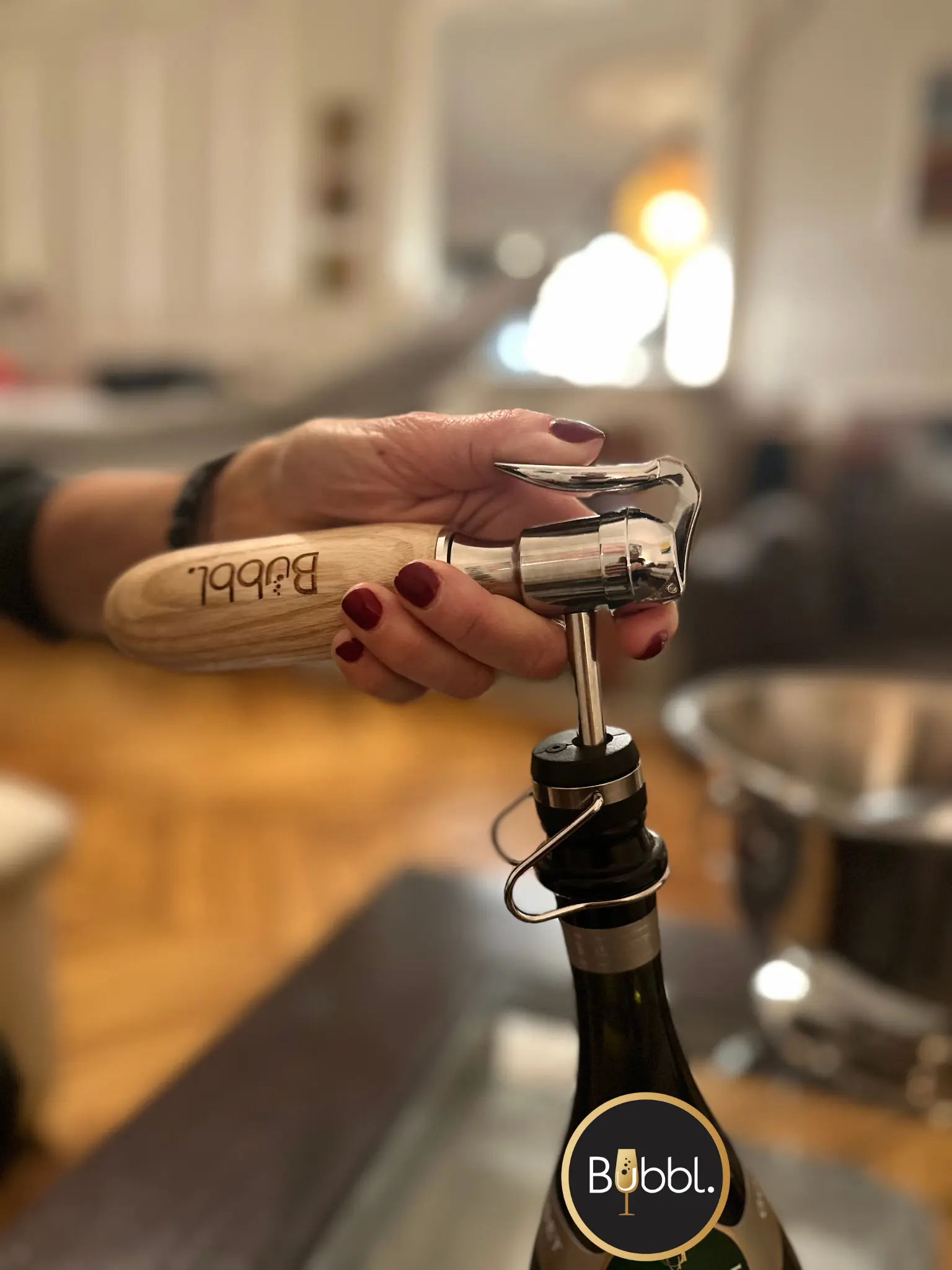
Bubbl. uses a portable injector gun to deliver oenological gas through a Smart Cap fitted to the bottle neck. Each injection takes approximately five seconds and introduces a blend of 80% CO₂ and 20% nitrogen. The CO₂ restores pressure and compresses the gas already dissolved in the wine, while nitrogen creates a protective inert atmosphere above the liquid. In independent French laboratory testing, sparkling wines treated this way remained satisfactory in taste, aroma and visual appearance for more than one week after opening.
Coravin Sparkling relies on CO₂ injections and a dedicated stopper. Bubbl., by contrast, requires no installation. Its Smart Cap contains a sealed pressure regulator made from food-grade silicone and stainless steel, which automatically releases excess gas and prevents over-pressurisation. The supplied 21 ml gas capsule can preserve a minimum of five full 75 cl bottles before it is exhausted.
Partially emptied bottles require a small adjustment. More empty space means more oxygen, so a slightly longer injection is appropriate. For best results, store the bottle upright below 10°C, either in a wine fridge or an ice bucket. In practice, active pressure restoration makes the difference: a bottle treated with Bubbl. and stored correctly performs measurably better than one closed with a mechanical stopper alone.
A smaller cap than the Coravin tap for Champagne bottles
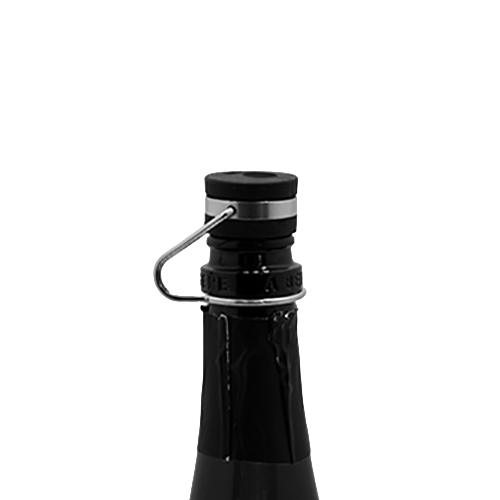
Presentation matters with Champagne. Bubbl. is a smaller, more affordable and customisable alternative to Coravin Sparkling, and its Smart Cap is much smaller than the tap Coravin fits on the bottle neck. As a result, a beautiful bottle of Champagne keeps its natural appearance on the table. When a private wine preserver is used to serve one bottle over several occasions, that discretion has practical value.
The Smart Cap fits standard 75 cl and magnum 1.5 L bottles, including Champagne, Prosecco, Cava and Franciacorta, without an adaptor. Its food-grade silicone and stainless steel construction allows it to be cleaned and reused. The injector gun needs only basic care: its trigger is the component most vulnerable to impact, so it should be stored away from knocks. The compact Wikeeps design suits home use and is easy to carry to an event, while the Sentinel version can be personalised with laser engraving.
Who benefits from each Coravin alternative
Bubbl. suits everyone from the enthusiast who opens a bottle for two glasses on a Tuesday evening to the small venue serving sparkling wine by the glass. The Coravin sparkling system serves a similar audience, but at a higher price and with a larger physical footprint.
- Home enthusiasts Bubbl.’s £199.95 standard kit suits people who open sparkling wine regularly but rarely finish a bottle in one session, providing reliable preservation without professional infrastructure.
- Collectors Those managing several open bottles over a week can use the five Smart Caps in the Sentinel configuration. Each cap maintains a separate bottle’s pressure independently, without cross-contamination of aromas.
- Small venues and wine bars A gas-injection system rated for over seven days of preservation supports by-the-glass sparkling service and reduces the waste associated with discarding unfinished bottles at the end of service.
- Coravin Sparkling owners The 27 ml Bubbl. CO₂/N₂ capsule is compatible with the Coravin sparkling system, allowing existing users to source Wikeeps capsules as a cost-effective alternative without changing equipment.
Bubbl. combines compact design, broad bottle compatibility and a lower entry cost, while each system follows the same essential principle: limit oxidation and maintain pressure after the bottle is opened.
| Criterion | Bubbl. standard kit | Coravin sparkling system |
| Price (UK) | £199.95 | Higher price point |
| Cap size | Compact, minimal visual impact | Larger tap on bottle neck |
| Gas blend | 80% CO₂ / 20% N₂ (oenological grade) | CO₂ |
| Preservation duration | Over 7 days (lab-verified) | At least 4 weeks |
| Bottle compatibility | 75 cl and 1.5 L, all sparkling types | Requires compatible stopper cap |
| Installation required | None | None |
| Capsule cross-compatibility | 27 ml capsule fits Coravin Sparkling | Proprietary capsules |
For readers comparing a dedicated sparkling system with the Coravin Pivot, which belongs to the still-wine range, the choice rests on format, cost and service context. Wikeeps Bubbl. functions as a complete wine preservation system for sparkling wine, while still-wine devices address a different need. Coravin Sparkling remains relevant for established Coravin users; for Champagne service, Bubbl. offers a compact seal, controlled pressure and a reusable cap designed to preserve the bottle over repeated pours.
Pressure stopper choices as a low-cost Coravin alternative
Not every situation calls for a gas-injection system. When a bottle still holds three or four glasses and will be finished within two days, a well-made pressure stopper is a practical, economical solution. These devices occupy a distinct place in wine preservation: they do not restore lost pressure, but they retain what remains and limit further oxygen ingress over a short window.
When a stopper is enough
A dedicated sparkling wine stopper differs fundamentally from a standard wine stopper. It has a pressure-resistant seal and a locking or clamp mechanism rated for the carbonation pressure found in Champagne or Prosecco bottles. The Repour Wine Saver and similar stoppers are intended for short-term use, typically a few days, rather than the week-long window that gas-injection systems can achieve. Selecting the right option therefore starts with how soon the bottle will be finished.
The most practical stoppers for home use adjust to both standard 750 ml and magnum 1.5 L bottles, although thick-rimmed bottles from certain producers may require firmer attachment to achieve a reliable seal. A single-arm clasp generally adapts to a wider range of bottle-neck profiles than a two-arm version, which suits cuvées from Cava to Crémant. Some models include a pressure indicator with a coloured ring that fades to signal the bottle should be finished; others have a date indicator for recording when it was opened.
- Pressure-resistant seal Unlike a standard rubber stopper, a sparkling-specific stopper is rated for carbonation pressure, preventing the closure from being pushed out by the wine’s internal gas.
- Locking mechanism A locking handle with clearly marked positions (open, mid-lock and fully locked) keeps the stopper secure during storage and releases it safely by venting CO₂ gradually before full removal.
- Refrigerator compatibility A proper locking stopper can be stored in the refrigerator, sometimes on its side, but the manufacturer’s instructions should be checked first.
Even a high-quality stopper cannot prevent natural CO₂ release indefinitely. Dissolved gas escapes over time, however tight the closure, so a bottle preserved this way will usually be somewhat less effervescent than when first opened. This is not a failure of the stopper but a physical inevitability.
Features that protect fizz in Coravin alternatives
When browsing for alternatives to Coravin for sparkling wine preservation on Amazon or elsewhere, it is easy to lose sight of meaningful differences in quality among the many stoppers available. Shop by function rather than brand.
- Internal pressure regulator The most capable systems include an automatic internal regulator that prevents over-pressurisation, stopping gas injection at a safe threshold and protecting both the wine and the bottle.
- Food-grade materials Silicone and stainless-steel construction help prevent off-flavours and allow the stopper to be cleaned regularly without degrading its sealing surfaces.
- Safety venting A two-stage release, first venting CO₂ and then fully unlocking, allows safe, controlled removal without the sudden pressure release that can disturb the wine or cause injury.
- Cleaning guidance Quality sparkling stoppers should be wiped with a damp cloth rather than submerged or placed in a dishwasher. This preserves the integrity of the pressure seal over repeated use.
Budget considerations are real: a good sparkling stopper typically costs between £5 and £21, a fraction of the price of gas-injection systems. For those who open a bottle of Cava or Prosecco occasionally and finish it within two days, this type of tool is entirely adequate. Its limits appear when the preservation window extends beyond a few days, or when the wine is valuable enough to justify actively maintaining its condition rather than simply slowing its decline.
Why Vacu Vin is not a sparkling wine preservation system
Vacuum-based wine preservation is well established for still wine. Products in this category are widely available and effective when used for that purpose. The problem begins when the same method is applied to sparkling wine, because the drop in pressure releases the very CO₂ that keeps the wine sparkling. This distinction explains why a Vacu Vin system is not suitable for Champagne or equivalent wines.
Vacuum limits for fizzy wine
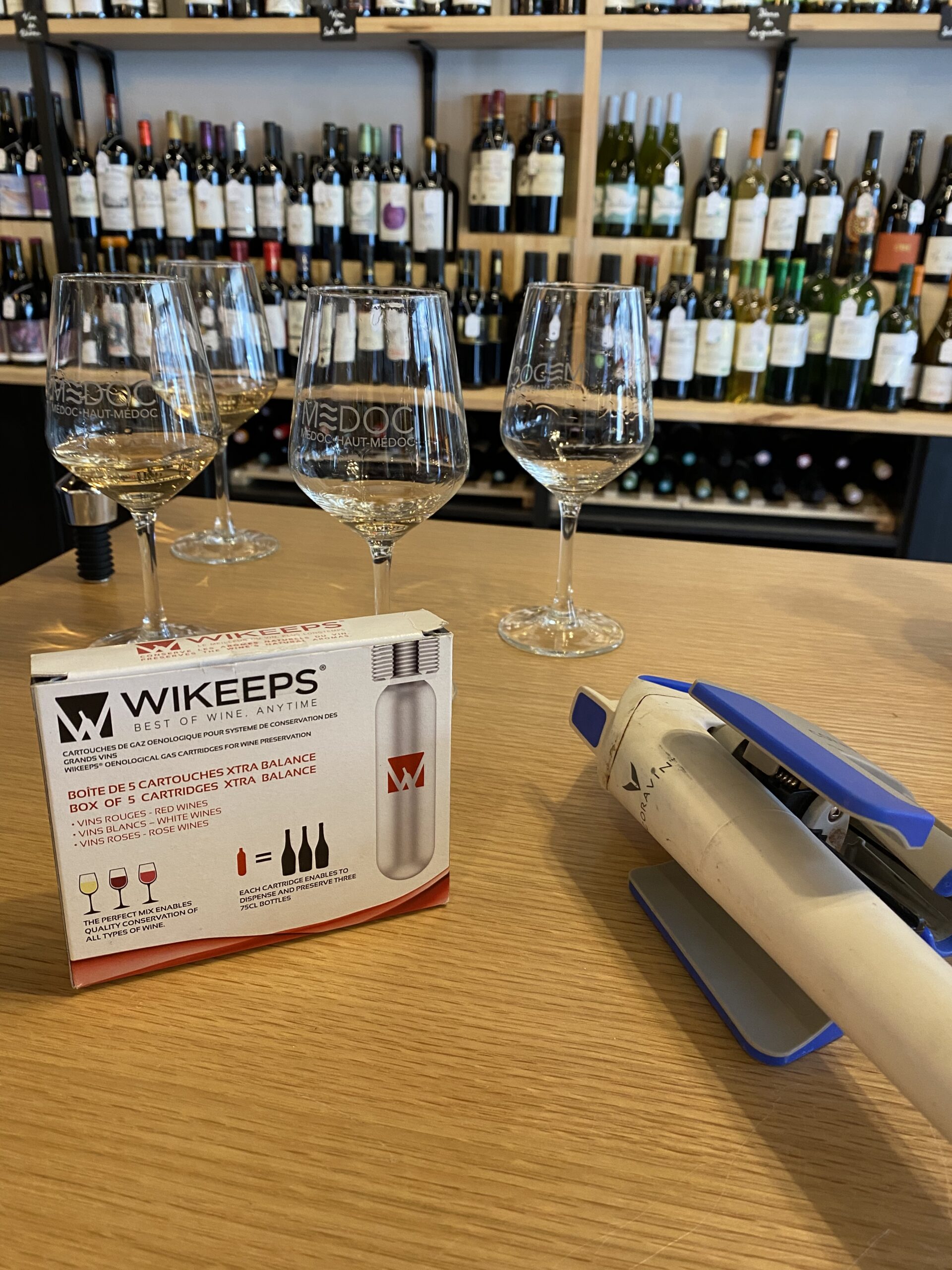
The Vacu Vin hand-pump system is a respected wine preservation tool for still bottles. Its stopper sits in the bottle neck, and the pump removes air from the headspace until the device indicates a seal, slowing oxidation for several days. With sparkling wine, however, reducing pressure encourages dissolved CO₂ to escape, accelerating the loss of fizz rather than preserving it. The Vacu Vin vacuum pump is therefore unsuitable for Champagne, Prosecco and other carbonated wines, and must not be used on pressurised bottles.
- Vacuum action conflicts with carbonation: lowering pressure in the headspace destabilises dissolved CO₂. The gas moves from the wine into the lower-pressure space above it, causing rapid flatness.
- Standard stoppers lack a pressure rating: the vacuum stopper used with still-wine pump systems is not designed to withstand pressure from sparkling wine inside the bottle. Carbonation may force it out, creating a safety risk.
- Automated vacuum units carry the same risk: multi-bottle automated systems marketed for still wine have identical limitations. None should be used on sparkling bottles unless the device is explicitly approved for pressurised bottles.
A sparkling-specific vacuum product may exist as a separate category, but it must be explicitly rated for carbonated bottles and used exactly as instructed. Its mechanism matters more than its marketing label. A tool that removes gas is fundamentally different from one that contains it; once a fine bottle has gone flat, that loss cannot be reversed.
Gas sprays and tight closures
Wine preservation systems generally limit oxygen exposure in one of two ways: by removing air from the bottle or by introducing an inert gas. Inert gas sprays follow the second route. Their formulations contain argon, nitrogen and CO₂, or pure argon, and once sprayed into the bottle, the gas pushes oxygen out of the headspace. For sparkling wine, this method only works with a tight, pressure-resistant stopper: without an adequate seal, the gas dissipates quickly and offers limited protection.
Disposable gas sprays also have a practical limitation: the canister gives no visual or tactile indication of how much gas remains. Users may therefore discover that it is empty only after a bottle has been inadequately protected. For preserving sparkling wines, a gas-injection system such as Bubbl. offers a measurable advantage because the remaining capacity can be checked by pressing the trigger. If no gas is released, the capsule is empty and ready to recycle. That transparency matters to anyone who opens wine regularly and needs confidence that the open bottle is genuinely protected from oxidation.
Capsules, Coravin compatibility and professional wine service
Every gas-based system needs replenishing when its gas runs out. More elaborate equipment may also call for batteries, recharging, replacement needles or gas cartridges. The ongoing cost of a gas-injection preservation system therefore depends mainly on capsule consumption. Wikeeps provides clearly specified capsule sizes and verified per-bottle yields, making the cost of preserving opened wine predictable rather than theoretical.
Capsules that keep wine fresh
The 27 ml Bubbl. capsule preserves a minimum of seven 75 cl bottles of sparkling wine. The 21 ml starter capsule supplied with the standard kit covers at least five full 75 cl bottles, or approximately 25 to 30 injections when calculated on six glasses per bottle. Both sizes contain food-grade gas, 80% CO₂ and 20% nitrogen, supplied by Linde Gas and manufactured within the European Union.
Each capsule has a legal shelf life of five years. A damaged capsule should be used within six months. Explore sparkling wine capsules for champagne preservation to assess ongoing costs before choosing a kit. The 27 ml format is also compatible with the Coravin Sparkling system, providing a gas option for users who already own that equipment. Empty steel capsules are fully recyclable with household metals: press the handle to confirm that a capsule is exhausted, then place it with food tins.
Sentinel for multi-bottle service
For professional settings, Wikeeps offers the Bubbl. Sentinel sparkling wine preservation system, priced at £1,499. It is a portable mechanical solution built from wood and stainless steel. A home enthusiast may keep wine fresh across two or three open bottles, whereas a venue pouring every glass of wine from several open sparkling bottles must protect them all at once. The Sentinel is designed for precisely that scale.
- Five Smart Caps The standard package includes five Smart Caps. Each one seals an individual open bottle, allowing five bottles to remain under controlled gas pressure at the same time.
- Refillable 600 ml cylinder The included CO₂/N₂ cylinder preserves approximately 150 standard 75 cl bottles before refilling. Wikeeps manages this service at its workshop near Château-Thierry in France.
- Two spray guns One gun connects to the refillable canister for service; the second supports travel tastings and off-site events, allowing the system to remain functional across multiple locations.
Laser engraving is available as a customisation option on the Sentinel, making it suitable as a branded presentation piece for wine bars and hospitality venues. An optional Temp Tour model adds integrated temperature control. These professional wine preserver systems follow a different investment logic from home kits: as volume increases, the cost per preserved bottle falls significantly. In regular by-the-glass service, the reduction in wine waste can offset the initial outlay within a defined period of consistent use.
Learn more about the Bubbl. sparkling wine preservation system to identify the configuration that best suits a specific service environment. Usage frequency, budget and the desired preservation time together point to the right configuration for Champagne, Prosecco and other open sparkling bottles.
Frequently Asked Questions
Is there a cheaper alternative to Coravin for sparkling wine?
Yes. The Bubbl. standard kit costs £199.95, less than the Coravin Sparkling system. It injects an 80% CO₂ and 20% nitrogen blend in about five seconds, and independent French laboratory testing found wine stayed satisfactory for over a week. Its 27 ml capsules also fit Coravin Sparkling. For bottles finished within two days, a pressure-resistant stopper costing £5 to £21 is enough.
Can a Vacu Vin or vacuum pump keep sparkling wine fresh?
No. A vacuum pump, including the Vacu Vin range, lowers pressure in the headspace, which draws dissolved CO₂ out of the wine and speeds up the loss of bubbles. Its stopper is not built for sparkling pressure and can be pushed out. Only use a device explicitly approved for pressurised bottles, one that adds or holds pressure rather than removing it.
Is the Coravin system worth it for sparkling wine at home?
The Coravin wine preservation system suits existing Coravin owners, and its sparkling version keeps pressure for at least four weeks. For most home enthusiasts, Bubbl. is a more compact and affordable option: a discreet Smart Cap, no installation, and a fit for 75 cl and 1.5 L bottles. Whichever system is chosen, store the bottle upright below 10°C.