
Table of Contents
- Freestanding wine cooler buying guide
- Dual zone wine cooler vs single zone wine fridge: which is right for you
- Stainless steel wine cabinet and cooler design: style meets preservation
- Under-counter wine cooler vs freestanding: installation and design choices
- Countertop wine cooler and compact wine fridge solutions for immediate service
- Frequently Asked Questions
Choosing the perfect wine cooler refrigerator can transform how wine is stored, preserved, and enjoyed, whether at home or in a professional setting. This guide covers the essentials of freestanding wine cooler models: capacity, temperature zones, and advanced features that protect each bottle while complementing a kitchen or entertaining space.
Freestanding wine cooler buying guide
Freestanding wine coolers offer notable versatility for enthusiasts who value both aesthetics and performance. Unlike built-in options, these appliances are easier to position and move, while still delivering precise temperature control suited to the collection. The difference comes down to understanding the key specifications: capacity, cooling system, and vibration management all shape how well a wine fridge performs over time.
Wine cooler bottle capacity: finding the right size
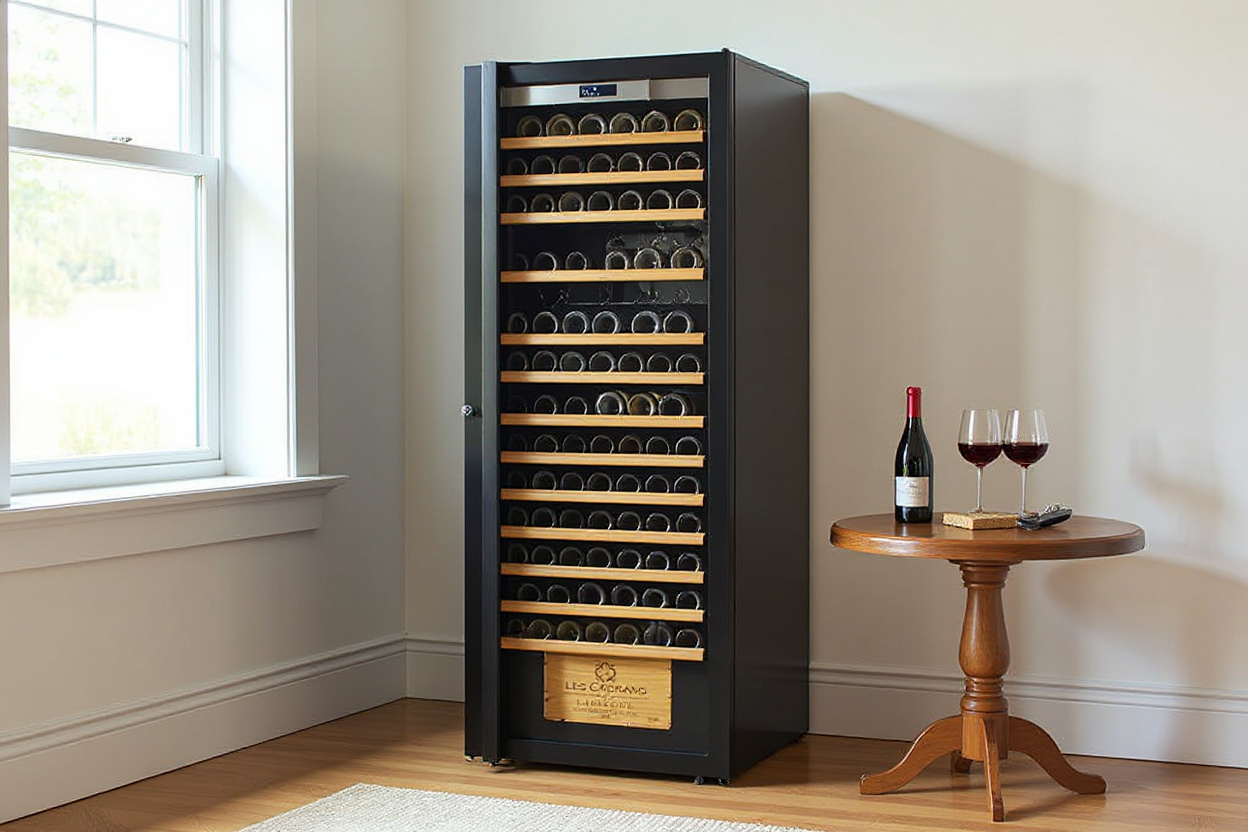
Matching the bottle capacity of a wine cooler to the collection means considering both present needs and future growth. Smaller wine cooler units, holding 6 to 12 bottles, suit occasional drinkers, while mid-sized models, from 20 to 100 bottles, support an expanding cellar. For serious collectors or commercial environments, larger formats of 166 bottles or more provide the necessary volume. In practice, manufacturer ratings are usually based on standard 750ml Bordeaux bottles, so Champagne bottles or magnums can reduce usable capacity by 20 to 30%.
A thoughtful choice is a wine cooler refrigerator with 10 to 20% more space than the current collection requires. As a result, there is room for new acquisitions without an early replacement. Internal dimensions also deserve close attention when wider or unusually shaped bottles are stored regularly.
Wine cooler temperature control, noise levels, and vibration management
A well-designed freestanding wine cooler recreates cellar-like conditions through accurate temperature control, typically between 5 and 20°C with a variation of around ±1°C. Compressor-based models using R600a refrigerant tend to perform more reliably than basic thermoelectric alternatives, particularly in warmer rooms. For living areas or open-plan kitchens, lower noise output matters: units below 45dB are preferable, with 25 to 39dB being especially comfortable. From there, anti-vibration technology becomes just as important, especially for mature wines that benefit from stable, undisturbed storage.
Installing your freestanding wine cooler: placement and ventilation requirements
Proper installation has a direct effect on the performance and lifespan of a wine fridge. Leave 5 to 8cm of clearance at the sides and rear, along with 25 to 30cm above the unit, so ventilation remains effective. Conversely, enclosing a freestanding model within cabinetry, unless it is specifically designed for built-in use, can lead to overheating. Heat sources such as ovens and direct sunlight should also be avoided, as they increase the workload on the compressor.
For garages or unheated rooms, models equipped with winter modes or internal heaters are often the right choice when ambient temperatures fluctuate. Adjustable feet help stabilise the appliance on uneven flooring, while proper door clearance ensures shelves remain fully accessible. Always confirm that the climate class rating matches the temperature conditions of the room.
Dual zone wine cooler vs single zone wine fridge: which is right for you
The temperature zones in a wine storage setup have a direct effect on how well it accommodates different wine styles and different moments of service.
Wikeeps specialises in wine preservation through innovative cooling and serving technologies. For those exploring wine cooler options, the selection of wine coolers offers a clear view of how proper cooling supports preservation, where preservation meets precision.
While a single-zone wine cooler maintains one stable temperature, making it well suited to storing one main type of wine, a dual zone wine cooler brings greater flexibility. It allows multiple wines to be stored and served at their ideal temperatures at the same time.
Who needs a dual zone wine cooler: collectors, professionals, and entertainers
Serious collectors often benefit from dual zone storage because it allows both delicate whites and structured reds to be kept in the same unit under more suitable conditions.
A well-designed wine cooler with independent temperature zones can keep crisp whites at 8°C in the upper compartment while holding bold reds at 16°C in the lower section: the difference comes down to precise separation and consistent control.
This dual zone functionality is equally valuable in professional environments, particularly during busy periods of service.
Restaurants and wine bars can serve chilled sparkling bottles alongside slightly warmer reds without delays for temperature adjustment. As a result, each pour can meet the intended serving standard.
Home entertainers enjoy much the same advantage. They can offer properly chilled whites and correctly tempered reds at the same moment.
Discover this 6-bottle dual-zone wine cooler refrigerator, designed with precise control from 3 to 18°C through advanced cooling technology. It accommodates standard bottles as well as large magnums, while also providing UV protection and intuitive LED controls.
Dual zone wine cooler serving: maintaining ideal wine temperatures
A dual zone wine cooler removes much of the uncertainty from wine service by maintaining each bottle at a more suitable drinking temperature.
The guidelines are straightforward: sparkling wines at 5 to 8°C, light whites and rosés at 8 to 12°C, lighter reds at 13 to 16°C, and full-bodied reds at 16 to 18°C.
In practice, many effective setups use the upper zone for service-ready whites at 6 to 8°C and the lower section for reds at 12 to 16°C. This creates a practical serving system that reduces waiting time when guests arrive and supports a smoother rhythm of service.
An ideal wine fridge configuration balances temperature precision with day-to-day convenience, from the first pour to the last.
Wine cooler bottle storage: adjustable racks and capacity considerations
Modern wine storage solutions are designed to accommodate varied collections through adaptable shelving.
Adjustable wooden racks can hold everything from Champagne bottles to Burgundy formats and magnums. Conversely, that flexibility may reduce overall capacity slightly.
Reliable manufacturers provide realistic capacity figures that take mixed bottle sizes into account. The right choice when comparing models is the one that matches the actual shape and range of bottles likely to be stored, rather than the maximum figure shown under ideal conditions.
Telescopic shelving maintains convenient access while keeping bottles properly horizontal: crucial for preserving cork integrity and wine quality.
Stainless steel wine cabinet and cooler design: style meets preservation
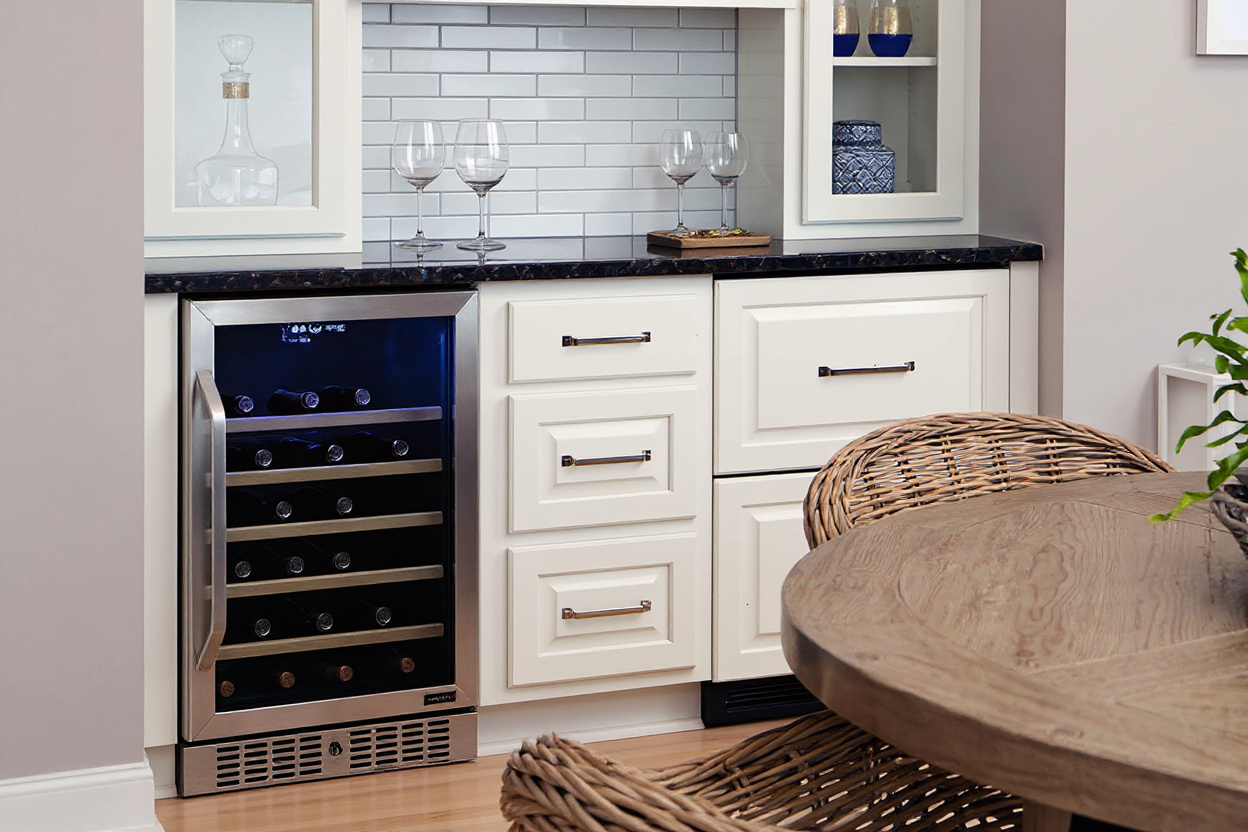
For modern wine storage needs, stainless steel wine cabinets offer a balanced combination of sleek style and practical functionality. These refined wine fridge units complement contemporary kitchen design while providing essential preservation features: UV-resistant glass doors, precise temperature control across multiple zones, and quiet operation suited to open-plan living spaces.
Choosing the best wine fridge: display features and preservation technology
When selecting the best wine cooler refrigerator, it is worth looking beyond surface appeal. A stainless steel wine cabinet should feel cohesive in the room, yet the difference comes down to the technical specifications that directly affect storage quality and longevity.
- Temperature stability: Leading wine cooler refrigerator models maintain temperatures within a ±1°C range and recover quickly after the glass door is opened: essential in practice for both frequent entertaining and professional settings.
- UV protection: Choose units with double- or triple-paned glass doors featuring UV-blocking technology to protect wine while keeping it visible and accessible.
- Humidity management: Reliable wine storage depends on maintaining 50–70% humidity to keep corks moist and labels intact.
Discover the Wikeeps 8-Bottle Dual-Zone Countertop Wine Cooler, offering compressor cooling from 3 to 18°C in a space-saving 78 × 33 × 29 cm format. It accommodates standard and magnum bottles and includes adjustable LED lighting with double-wall glass: the right choice when compact storage and flexible serving temperatures matter equally.
Wine cooler energy rating, noise levels, and long-term durability
A high-quality wine fridge balances performance with efficiency and durability. From there, the focus shifts to long-term operating comfort as much as immediate cooling power.
Modern wine cooler refrigerator models using R600a refrigerant typically consume just 70–150 kWh annually while meeting current environmental standards. As a result, they are generally more efficient than older cooling systems.
For open kitchen layouts, ultra-quiet units operating at 25–39 dB are often preferable. Check the quality of the door seals, hinges, insulation, and shelf stability to ensure that a wine cabinet performs consistently from the first pour to the last.
Wine cooler features: from chilling to preserving and serving
The best wine storage solutions now go beyond basic cooling, offering preservation and serving features that reflect professional standards. This is where preservation meets precision.
Thoughtfully engineered wine fridge units may include dedicated pass-throughs for accessory integration, allowing preservation systems to be connected while maintaining a sealed glass-door environment. Once opened, a bottle benefits from the same logic: controlled conditions extend both service quality and enjoyment.
Consider the Wikeeps compact wine cooler (Wibox 2), which provides precise temperature control from 5 to 18°C in a modest 29 × 26 × 26 cm footprint. It accommodates larger bottle sizes, features convenient LED lighting, and operates with notable energy efficiency: the right choice when tasting sessions and quick access matter most.
Under-counter wine cooler vs freestanding: installation and design choices
Deciding between an under-counter installation and a freestanding model has a direct impact on both setup requirements and day-to-day operation. Understanding these core differences helps avoid costly mistakes, while ensuring the wine storage solution suits the available space and overall design intent.
Can a wine cooler replace a fridge? Understanding wine refrigeration needs
While premium wine cooler units can reach serving temperatures, including 5 to 8°C for sparkling wines, they are not suitable replacements for standard refrigerators. These specialised appliances regulate temperature ranges with precision, support appropriate humidity control, and minimise vibrations for wine preservation rather than food safety.
Regular refrigerators maintain 0 to 4°C to preserve perishables, whereas wine storage units typically hold 10 to 15°C for ageing and 5 to 18°C for service. Humidity levels differ as well: wine coolers generally maintain 50 to 70% humidity to keep corks in proper condition, while food fridges operate in a much drier environment.
That said, a wine fridge can serve very well as a secondary beverage chiller when entertaining. With precise temperature control and reduced vibration, it suits Champagne, beer, and similar drinks that benefit from gentle handling; in practice, it should not be used for dairy, meat, or anything requiring storage below 5°C.
Built-in wine cooler vs freestanding models: installation and performance differences
Built-in wine coolers use front or bottom ventilation for clean integration into cabinetry, while freestanding models need open space around the sides and rear for heat dissipation. The difference comes down to airflow: placing a rear-vented freestanding unit inside cabinetry can lead to overheating and may void the warranty.
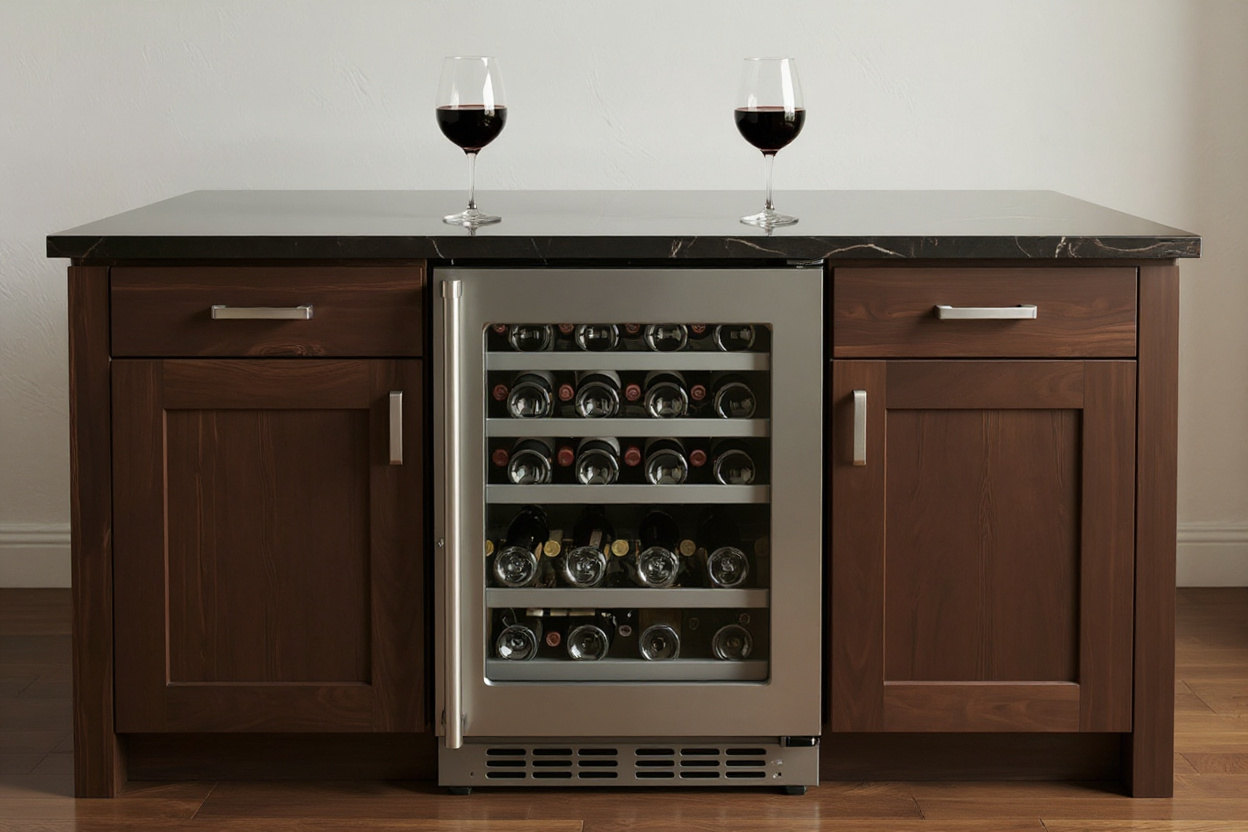
Under-counter dual-zone units, sometimes described simply as under-counter models, sit neatly within the kitchen while providing two temperature zones for different wine styles. They usually cost more than comparable freestanding versions; conversely, when installed correctly, they often deliver stronger energy performance and a more streamlined finish.
| Feature | Freestanding | Built-in |
| Ventilation | Side, rear, and top clearance required | Front or base venting for a flush fit |
| Mobility | Easily relocated | Permanent installation |
| Cost | Generally lower initial price | Higher cost and greater installation complexity |
| Capacity range | 6-312+ bottles available | Limited by cabinet dimensions |
Thanks to their flexible installation, freestanding units suit renters, frequent movers, or spaces without custom cabinetry. Slim-depth models, typically around 58 cm, fit compact kitchens while maintaining full vertical capacity; in practice, door swing and shelf access still need to be factored in.
Comparing wine cooler brands and models: what to evaluate before buying
Effective in-store comparisons should focus on real-world performance rather than technical specifications alone. Request temperature logs that show 48-hour stability on each shelf, and test actual bottle capacity with different shapes instead of relying solely on standard Bordeaux counts.
Warranty coverage varies considerably. Premium wine cooler brands often include three to five years of compressor protection, with expected lifespans that can exceed two decades, whereas entry-level models usually provide only one to two years of cover, which may suit short-term use but offers less long-term reassurance.
Delivery details matter even more for undercounter installations, where precise dimensions and proper electrical connections are essential. Before purchasing, confirm stock availability, verify stairwell access, and check whether the retailer offers old appliance removal; the difference comes down to careful preparation from the first pour to the last. Many dealers also provide financing options or trade-in programmes, making higher-end models with advanced control features more attainable.
Countertop wine cooler and compact wine fridge solutions for immediate service
Countertop wine chillers combine convenience, performance, and space-saving design. These compact wine coolers provide precise temperature control, keeping bottles at ideal serving conditions while fitting neatly on kitchen counters, bar tops, or tasting room surfaces, where access and presentation matter.
Compact wine chiller and counter wine cooler design for quick access
These efficient small wine coolers generally hold 2 to 8 bottles while maintaining accurate temperature zones for different varietals. The right choice when immediate service is essential, they suit wine bars, restaurants, and private spaces alike. Wikeeps countertop wine coolers feature compact formats designed for both domestic and professional use.
- Space-saving design: from compact 2-bottle units (29 × 26 × 26 cm) to larger 8-bottle models (78 × 33 × 29 cm), these coolers fit easily into a kitchen or service area without modification.
- Easy access: vertical bottle storage and a glass door make selection faster during busy service periods.
- Temperature precision: advanced compressors maintain accuracy to within ±1°C, even in warmer kitchen environments up to 30°C.
- Display potential: integrated LED lighting turns the cooler into a refined showcase that can encourage by-the-glass sales.
This balance of practicality and visual appeal makes countertop units particularly well suited to commercial spaces. In practice, they help present bottles attractively while preserving reliable serving conditions from the first pour to the last.
Wine cooler features: integrating preservation systems with compact units
Today’s small wine fridges can also integrate with preservation systems to extend the life of opened bottles. Specialised designs allow the glass door to close correctly even when the unit is connected to an inert gas system.
Once opened, a bottle can remain fresh for up to four weeks when paired with the appropriate system. The difference comes down to controlled protection against oxidation, which helps reduce waste while broadening any by-the-glass selection.
Slimline wine cooler maintenance and keeping wine cold efficiently
A slimline wine cooler requires little upkeep yet offers dependable performance. Routine quarterly cleaning usually involves:
- unplugging the unit and removing all bottles
- wiping the interior with a mild cleaner
- drying the interior fully before restocking
For consistent results, check wine temperature settings regularly, maintain adequate ventilation, avoid overcrowding, and clean the door seals. As a result, the unit retains its efficiency and supports stable serving conditions where preservation meets precision.
Frequently Asked Questions
What is the difference between a wine cooler and wine fridge?
A wine cooler and a wine fridge are, in essence, the same appliance. Both are designed specifically for wine storage, with precise temperature control, UV protection, and minimal vibrations.
Terminology may vary by brand or region; however, their core function remains the same. Unlike a standard refrigerator, these units maintain suitable wine storage conditions: typically 5–20°C, with humidity control around 50–70%, and limited disturbance to support proper bottle ageing. In practice, the difference comes down to naming rather than performance.
Do wine coolers get as cold as a fridge?
Some premium wine coolers can reach 3–5°C, which suits sparkling wines and certain whites served very cold. Even so, they are engineered primarily for wine storage rather than general refrigeration.
A standard fridge usually runs at 0–4°C for food safety. Conversely, a wine fridge is designed to protect wine with gentler working ranges, often 5–20°C, helping to avoid cork shrinkage and unnecessary thermal stress. An integrated wine cooler prioritises steady temperature control over deep chilling, where preservation meets precision.
Can a wine cooler be used as a fridge?
A wine cooler can work well for drinks such as beer, water, or Champagne, yet it should not replace a conventional fridge for perishable food. Its temperature range and humidity control are set for wine, not for food preservation.
Built-in wine coolers and freestanding models are well suited to beverage service and occasional entertaining. As a result, they usually do not offer the colder settings required for meat, dairy, or other sensitive items. For food safety over time, a standard refrigerator remains the right choice when refrigeration needs go beyond bottles. Additionally, wine chillers, from compact countertop formats to full-height cabinets, are purpose-built for wine and remain distinct from food refrigeration appliances.