
Table of Contents
- Oenological gas formula for wine preservation
- Why argon protects wine after opening
- Choosing a cartridge for wine preservation
- Frequently asked questions
Understanding which oenological gas formula is used in wine preservation cartridges matters to anyone seeking to maintain quality after opening. The formulation explains how oxygen is displaced, why the blend was developed, how it protects wine at a chemical level and which cartridge suits still or sparkling wines, from the first pour to the last.
Oenological gas formula for wine preservation
This formula reflects decades of oenological research and collaboration with specialist gas suppliers operating at an industrial level.
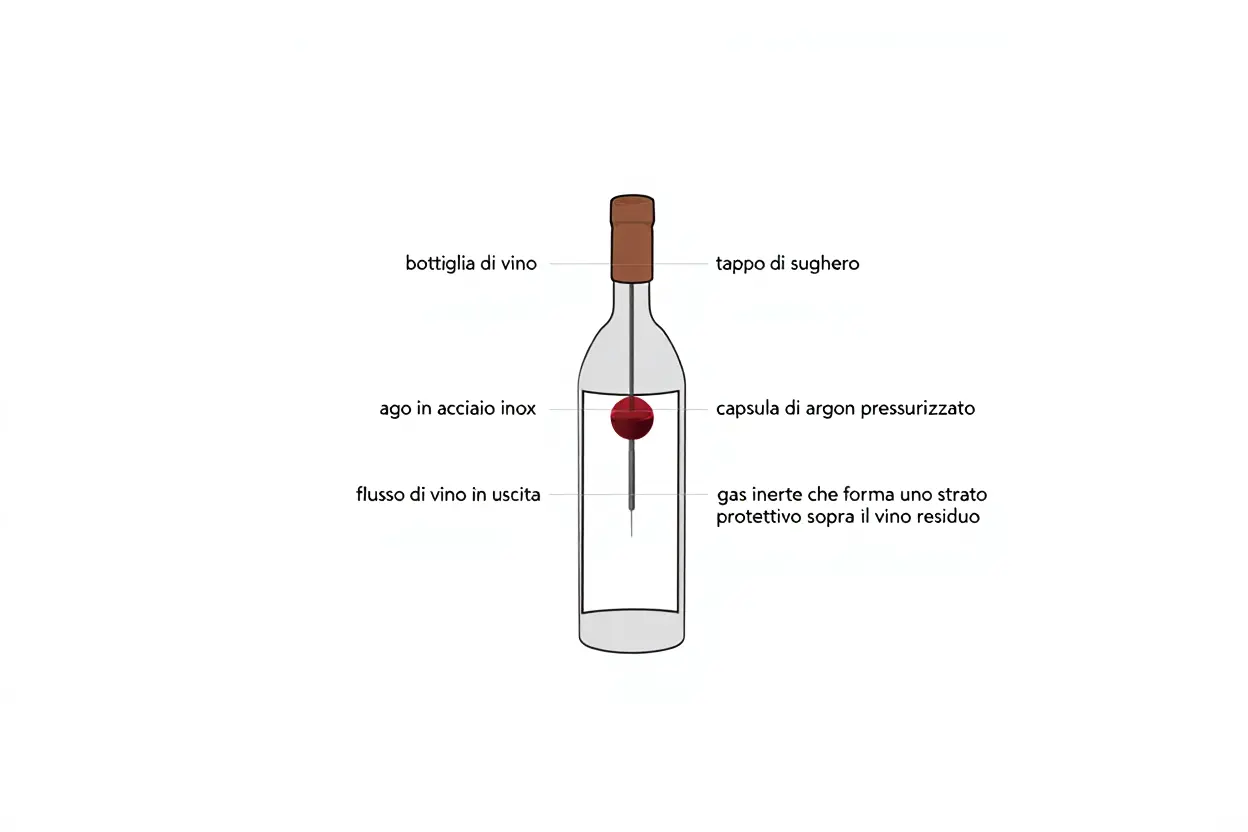
The 80% argon and 20% CO2 blend
Those asking which oenological gas formula is used in wine preservation cartridges will find a consistent industry answer: an 80% argon and 20% carbon dioxide blend, food-grade and developed specifically for still wines. Wikeeps uses this formulation in every cartridge, with slightly higher-than-nominal values of 79% argon and 21% CO2, produced in collaboration with Linde Gas, a world leader in oenological gases. The formula complies with OIV gas analysis methods and undergoes rigorous quality-assurance testing before release. See the oenological gas formula in Wikeeps cartridges for the full technical detail.
- Argon proportion: At 79–80% of the blend, argon forms the primary inert barrier above the wine surface. It displaces oxygen without reacting with the liquid.
- CO2 proportion: The 20–21% carbon dioxide component is calibrated to complement the CO2 naturally present after fermentation, supporting freshness without introducing carbonation.
- Oxygen threshold: Together, the two gases reduce oxygen in the headspace to below 1%, the critical threshold for preventing wine oxidation.
- Standards compliance: The blend meets rigorous OIV oenological standards, confirmed through quality-assurance testing with Linde Gas before each production batch reaches the market.
The specification of 79% argon and 21% CO2 reflects the precision required for this application. The slight difference from the marketed 80/20 figure has no practical consequence for the wine, but it shows that these cartridges are engineered products rather than commodity cylinders. In practice, the difference comes down to consistent gas sourcing and the integrity of the sealing process, which maintains compression at 205 mPA inside each 21 ml unit.
Why food-grade gases matter
The choice of a wine preserver chemical for direct contact with a consumable product carries real regulatory importance. Only food-grade gas that has been tested and certified for contact with food and beverages should be used in wine preservation. Argon has GRAS (Generally Recognized as Safe) status, while the CO2 in the Wikeeps blend is sourced from air through fractional distillation, helping prevent contaminants from entering the bottle with the protective atmosphere.
Replacing food-grade gases with industrial-grade alternatives can introduce impurities that alter a wine’s aroma and potentially compromise its safety. The Wikeeps formula is sourced through Linde Gas and manufactured in the EU to oenological standards. Each cartridge remains effective for five years before first use.
How the formula limits oxidation
Once opened, wine begins to oxidise. The argon and CO2 blend displaces oxygen-rich air from the headspace, replacing it with a dense, inert atmosphere that prevents further contact between the wine surface and atmospheric oxygen. Independent laboratory testing in France confirms that, when correctly applied, the blend can preserve opened wine for more than 30 days while maintaining taste, aroma and freshness.
Argon cannot reverse oxidation that has already occurred. A wine left open for several days before treatment will not recover its original profile. Once opened, however, applying the system after every pour renews the protective layer and extends the drinking window. Warmer storage accelerates residual oxidation, so suitable conditions and a compatible stopper also help achieve the full 30-day preservation window supported by the formula.
Why argon protects wine after opening
Argon protects wine through both physics and chemistry. Its density, chemical inertness and behaviour inside a closed bottle make it particularly well suited to wine preservation among commonly available inert gases. These properties explain why an 80/20 argon-CO2 blend is used in many still wine preservation cartridges instead of a simpler alternative.
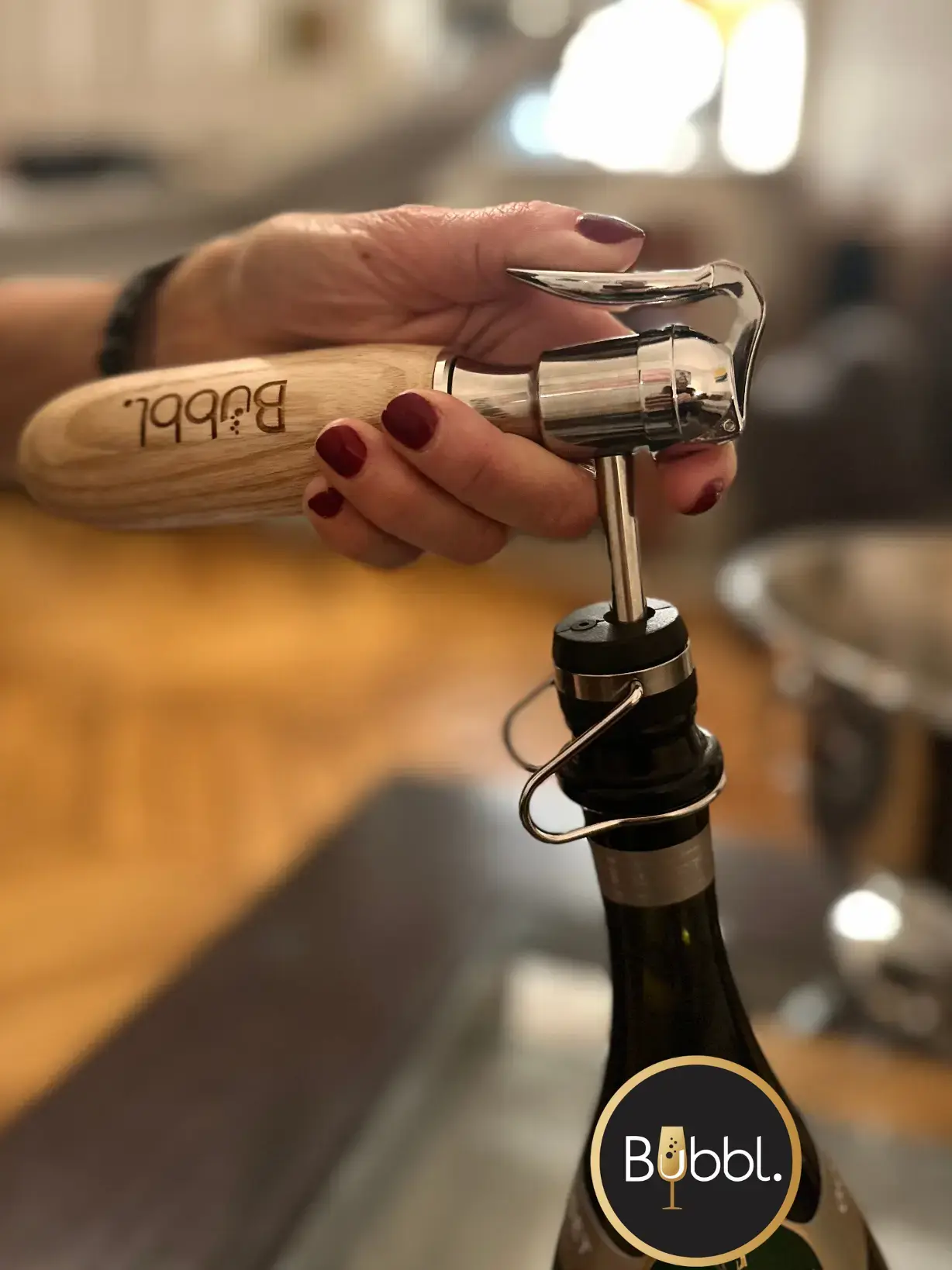
Argon’s dense protective layer
Argon has an atomic mass of approximately 40 u, compared with 32 u for oxygen and 28 u for nitrogen. Because it is heavier than the air in an opened bottle, it sinks towards the wine surface and forms a stable, continuous barrier. An argon wine preserver uses this physical behaviour to displace oxygen without a sealed or pressurised vessel: the gas descends and remains in place while the bottle stays upright.
This stability distinguishes argon from lighter gases. After each pour, a measured injection restores the protective layer without complex calibration, leaving the wine beneath it in an almost inert atmosphere. Oxidative reactions are therefore slowed, which is especially valuable for delicate varieties, Pinot Noir, aged whites and other aromatic still wines whose volatile compounds are particularly vulnerable to oxygen contact.
Why CO2 is included
Pure argon is effective for preserving wine, yet the 80/20 blend provides an additional advantage for still wine. Its 20% carbon dioxide component reflects the dissolved CO2 naturally left by fermentation. Without it, a purely argon atmosphere can gradually draw dissolved gas from the wine, producing a flatter, more astringent profile. The calibrated proportion helps limit that exchange and maintain freshness during the preservation period.
Systems such as the Coravin wine preservation system use pure argon to displace wine without removing the cork, relying on natural cork’s elasticity to reseal the puncture. Wikeeps cartridges are compatible with Coravin-type systems and use the same 21 ml format and identical food-grade gas specifications. As a result, the oenological gas blend in Wikeeps cartridges is accessible to owners of those devices. Further detail appears in the oenological gas blend used in Wikeeps cartridges, including how gas selection affects preservation outcomes.
Argon compared with other gases
Nitrogen, at 28 u, is lighter than both argon and oxygen. In an open bottle, it circulates through the headspace rather than settling into a stable layer, so more gas is required to achieve comparable protection. Purging a bottle with nitrogen can work in closed dispensing systems where oxygen is evacuated first, but it is less efficient for the short-cycle, pour-by-pour service required in homes and restaurants. Pure CO2 presents a different issue: it dissolves into still wine, forming carbonic acid and adding unwanted fizz that changes texture and aroma.
The 80/20 argon-CO2 blend is the right choice when preserving wine over several sessions and weeks, particularly in still wines where oxidation and decarbonation both matter. In practice, food-grade argon offers the density and inertness needed for reliable cartridge-scale protection. The same principle underpins Wikeeps: a controlled gas barrier protects wine from repeated oxygen contact without changing its character.
| Gas | Atomic/molecular mass (u) | Forms stable barrier? | Suitable for still wine? | Risk to wine |
| Argon (80%) | 40 | Yes, dense, settles above wine | Yes | None, inert, odourless, non-reactive |
| Carbon dioxide (20%) | 44 | Partial, dissolves into wine | Only in calibrated blends | Carbonation if used pure |
| Nitrogen | 28 | No, circulates in headspace | Limited | Higher gas consumption; decarbonation risk |
Choosing a cartridge for wine preservation
Selecting the correct cartridge begins with the wine style: still or sparkling. These two categories require different gas formulas, and using a still-wine cartridge on Champagne, or the reverse, can compromise the wine’s character.
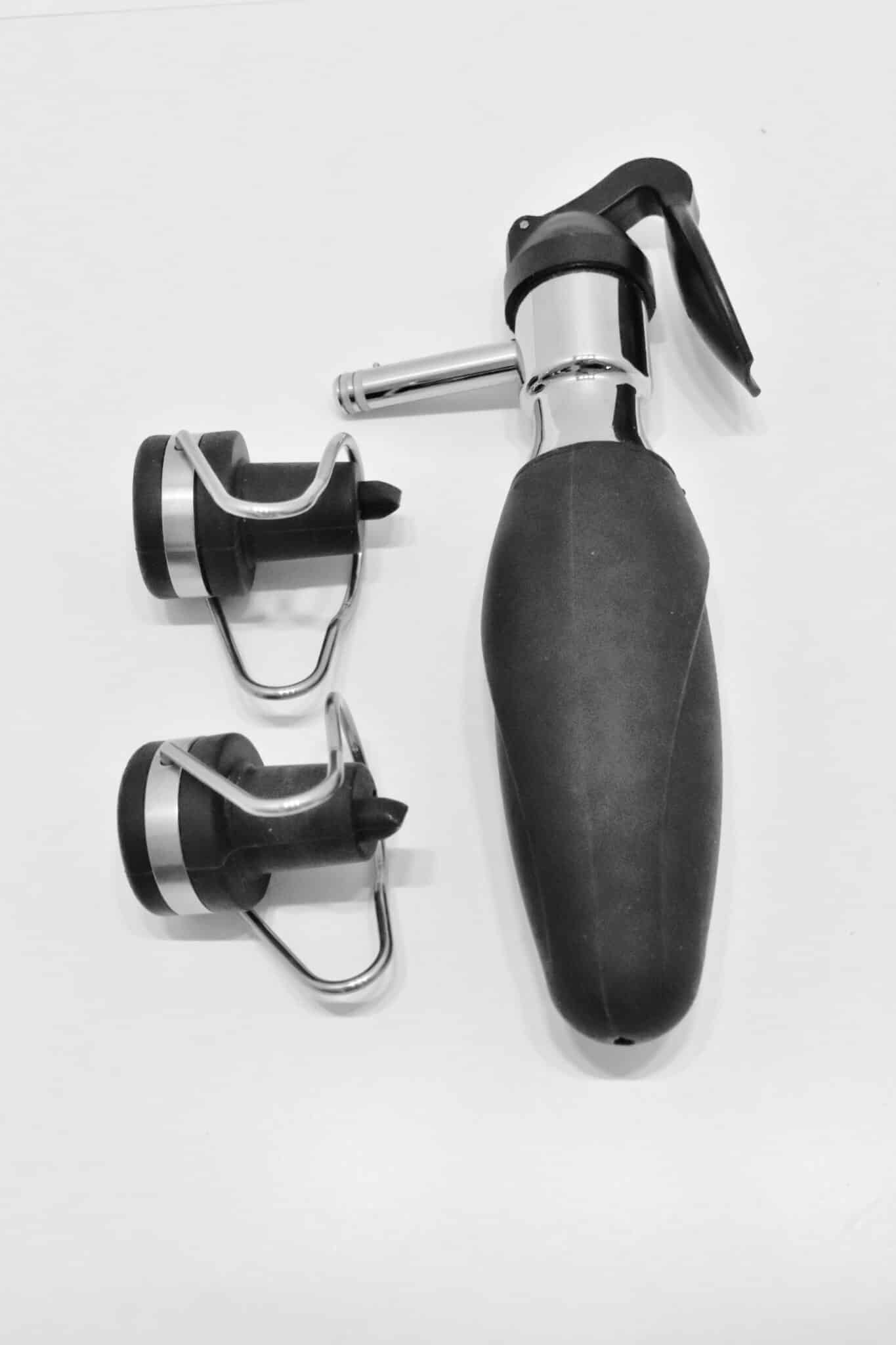
Still wine and sparkling wine formulas
Sparkling wine requires a different formula: Bubbl. cartridges use a food-grade gas blend of 80% CO2 and 20% nitrogen, compressing the dissolved gas already present in the bottle to create a protective atmosphere that prevents oxidation without disturbing its effervescence. Explore the oenological gas formula in sparkling wine cartridges for Champagne, Cava, Prosecco and other styles.
The sparkling-wine formula operates at 2.5 to 3 bars through the Smart Cap system, maintaining bubbles and aromas for more than one week.
- Still wines Use 80% argon and 20% CO2 to displace oxygen and support freshness for up to 30 days with a compatible stopper.
- Sparkling wines Require 80% CO2 and 20% nitrogen, injected at controlled pressure to preserve bubbles and aroma for more than one week.
- Delicate reds and aged whites Benefit from the argon-dominant formula because aromatic compounds are particularly vulnerable to brief oxygen contact.
- Champagne, Cava, Prosecco Require the Bubbl. cartridge and Smart Cap system; the still-wine argon formula is unsuitable for preventing the loss of effervescence.
Each still-wine cartridge from Wikeeps contains 6.5 g of compressed gas in a 21 ml unit and can serve and preserve a minimum of 18 glasses across three 75 cl bottles. Each Bubbl. cartridge, by contrast, preserves a minimum of five open 75 cl bottles of sparkling wine.
Cartridge quality and storage
Cartridge integrity directly affects preservation performance. A quality cartridge should pass a simple shake test with no internal rattling, and show no rust spots, greasy residue, burrs or dents around the gas outlet. Its plastic sleeve cap must also seat cleanly in the dispensing system. Wikeeps cartridges are manufactured in the EU from stainless steel and chromed steel, supplied in packs of five or ten units, and recyclable as household metal waste once empty.
Storage conditions matter too. Keep cartridges in a cool, ventilated area below 50°C, since heat increases the internal pressure of a compressed-gas unit. Argon has no chemical half-life: as a stable noble gas, it does not degrade inside an intact container. The five-year effective life of an unused cartridge therefore depends on container integrity rather than gas deterioration.
Checking the outlet cap before use is a brief but worthwhile habit. A compromised outlet may indicate gas loss, reducing the number of effective pours per cartridge and weakening the preservation cycle.
Using a preservation system correctly
The Wikeeps Essential Kit includes a French-patented dispenser gun, central dome, preservative caps, spout and filter. It injects an argon-CO2 blend in a controlled manner, allowing wine to be poured while the remaining wine is protected from oxygen. The system is intended for professional and home use, and its compatibility with Coravin-type cartridge formats allows existing users to access the same food-grade gas formula without replacing their equipment. The OIV gas analysis methods explain the standards behind these specifications.
Consistent technique matters as much as cartridge quality when the aim is to preserve opened wine across several sessions. Reinject gas after every pour, not only when the bottle is first opened, to sustain the inert atmosphere and prevent gradual oxygen accumulation that shortens wine freshness. Store the treated bottle upright in a cool environment afterwards: the argon layer remains stable above the wine surface, and the full 30-day preservation window remains achievable from first injection to final glass.
Frequently asked questions
What is the best gas for preserving wine after opening?
Argon is widely regarded as the most effective single gas for preserving wine after opening. Its density, approximately 1.38 times that of air, allows it to form a stable, self-sustaining layer directly above the wine surface. In practice, a calibrated blend of 80% argon and 20% carbon dioxide performs better for still wines because the CO2 component helps prevent the wine from losing its dissolved gas and becoming astringent. This is the formula used in Wikeeps cartridges, developed with Linde Gas. Nitrogen is lighter, forms no stable barrier, and requires higher volumes for equivalent protection, making it less efficient for open-bottle, pour-by-pour use.
What gas is used in wine preservation cartridges?
The gas used in still-wine preservation cartridges is food-grade and oenological, typically specified at 79% argon and 21% CO2. Argon is inert, odourless and non-reactive, so it does not alter the flavour or aroma profile of the wine it protects. The carbon dioxide component is calibrated to balance the dissolved CO2 naturally present in wine after fermentation.
For sparkling wines, the formula changes entirely. The appropriate cartridge uses 80% CO2 and 20% nitrogen, as found in Bubbl. cartridges, which operate at controlled pressure to maintain effervescence rather than eliminate it.
How long can an opened bottle of wine be preserved with an argon cartridge?
When used correctly with a compatible stopper and dispensing system, an argon-based preservation cartridge can preserve an opened bottle of wine for up to 30 days. This figure is confirmed by independent laboratory testing conducted by a French laboratory. The key conditions are consistent gas reinjection after every pour, upright storage and a cool environment. Warmer temperatures accelerate wine oxidation, even when a protective gas layer is in place.
A single 21 ml Wikeeps cartridge can manage this process across a minimum of 18 glasses from three 75 cl bottles.