
Table of Contents
How to preserve sparkling wine fizz without a stopper
Maintaining carbonation in an opened bottle of sparkling wine comes down to understanding CO₂ behavior. Once the pressure releases upon opening, gas starts escaping rapidly. To preserve those precious bubbles inside the bottle, you’ll need to recreate pressure, minimize air exposure, and maintain a colder temperature.
Cold storage methods to slow carbonation loss
Your best weapon against losing sparkling wine bubbles quickly is proper temperature control. Store leftover sparkling wine upright in the coldest part of your fridge (between 6-8°C), away from the door where temperature fluctuates. The colder temperature slows molecular movement, helping preserve prosecco carbonation longer.
- Chilled towel wrap: Dampen a cloth, wrap it around the bottle neck, and refrigerate – this keeps the glass consistently cool.
- Ice-water immersion: Submerge the bottle in an ice bucket with a bit of water for even cooling and stable sparkling conditions.
- Quick-chill trick: No fridge space? Place the opened champagne in an ice bucket with a wet cloth covering the neck.
- Temperature stability: Keep away from heat sources or sunlight to prevent pressure changes that kill bubbles.
Never freeze sparkling wine – expanding liquid can break glass and destroy carbonation permanently. For better results, consider specialized systems that keep sparkling wine fresh by combining cold storage with pressure maintenance.
DIY sealing techniques using household items
Create effective seals with common kitchen items to slow oxidation and preserve prosecco carbonation. Cover the bottle opening with plastic wrap, secure it tightly with a rubber band, or press aluminum foil into a tight seal over the mouth.
- Silicone stopper alternative: Cover with a silicone baking mat and wedge a metal spoon handle under the lip for temporary pressure.
- Modified cork: Insert a clean cork (wrapped in wax paper for better seal) partway into the bottle neck.
- Pouring-friendly seal: Insert a funnel and cover its opening with plastic wrap secured by a rubber band.
- Food-safe seal: Apply food-grade silicone to a cork for a flexible, airtight seal lasting a couple days.
These homemade solutions work much better than the old spoon method (whether using a silver spoon or other metal spoon), which doesn’t actually protect carbonation. Reusable silicone stoppers or small squeeze-bottle caps also work if you store the open bottle of sparkling upright.
Reducing headspace by transferring to smaller containers
Less air exposure means longer lasting bubbles. Transfer leftover sparkling wine to a smaller, airtight container filled nearly to the top – think 250ml soda bottles, mason jars, or even another wine bottle.
Consider buying single-serve splits for smaller gatherings. When transferring between wine bottles, tape them neck-to-neck for cleaner pouring and less oxygen exposure. A quick vacuum pump session afterwards removes remaining air pockets, giving your prosecco carbonation extra life.
Advanced gas-injection systems for sparkling wine preservation
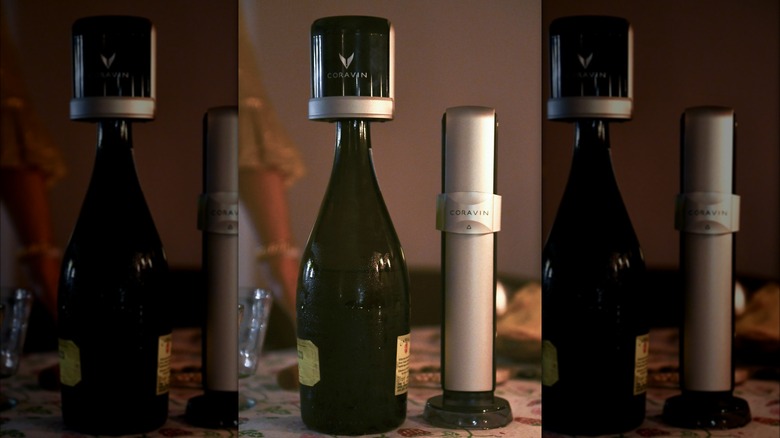
For serious sparkling wine lovers, professional tools like the Coravin Sparkling system can maintain bubbles for up to a week. This system injects a precise CO₂-nitrogen mix that recreates the original bottle pressure after each pour.
The device’s special gas blend (80% CO₂, 20% nitrogen) preserves carbonation and prevents oxidation in opened champagne. Simply repressurize after pouring, then store the champagne bottle upright at ideal drinking temperature (6-8°C). Forget the spoon method – this is real preservation technology.
| Preservation Method | Duration | Effectiveness | Cost |
| Plastic wrap + rubber band | 1–2 days | Moderate | Minimal |
| Transfer to smaller container | 2–3 days | Good | Low |
| Reusable silicone stopper | 2–4 days | Very good | Low |
| Gas-injection system | 7–10 days | Excellent | Moderate to high |
Standard Coravin cartridges contain enough gas (21-27ml) to preserve multiple bottles. Always keep replacements ready and ensure the bottle neck stays clean between uses. For more on the science behind keeping bubbles alive, explore Discover the science of keeping Prosecco bubbly and why the metal spoon or silver spoon method doesn’t actually help with sparkling wine preservation.
Frequently Asked Questions
Does putting a teaspoon in Prosecco keep it fizzy?
While the spoon method—placing a metal spoon or silver spoon in the bottle neck—is often suggested, scientific tests prove it’s ineffective. This old trick doesn’t actually slow down carbonation loss from opened sparkling wine. For better results when storing champagne, use proper sealing methods like cling wrap, a silicone stopper, or any airtight closure that prevents bubbles from escaping.
How long will Prosecco stay fizzy once opened?
An opened bottle of sparkling wine quickly loses its effervescence at room temperature—most bubbles fade within six hours and vanish completely overnight. However, refrigerating leftover champagne at a colder temperature with a tight seal can keep it bubbly for up to three days. For longer storage of leftover sparkling wine, specialized preservation systems that inject gas can maintain fresh bubbles for about a week.
What pouring technique helps preserve bubbles in opened champagne?
To maintain fizz in an open bottle of champagne, use a careful pouring technique: angle the glass and let the sparkling wine flow gently along the side. This prevents excessive bubbles from escaping. Always recap the sparkling wine bottle immediately after serving, and if using a stopper, lightly tap it against the neck first to release any trapped gas without sudden pressure loss.