
Table of Contents
Choosing the right champagne stopper in the UK
Finding the perfect bottle stopper requires a good understanding of how pressure works inside a champagne bottle. The device needs to withstand 5–6 atmospheres of pressure and fit securely on the variety of neck shapes found on bottles sold throughout Britain. UK retailers stock everything from simple rubber plugs to advanced clamp systems that lock tightly onto the bottle’s rim.
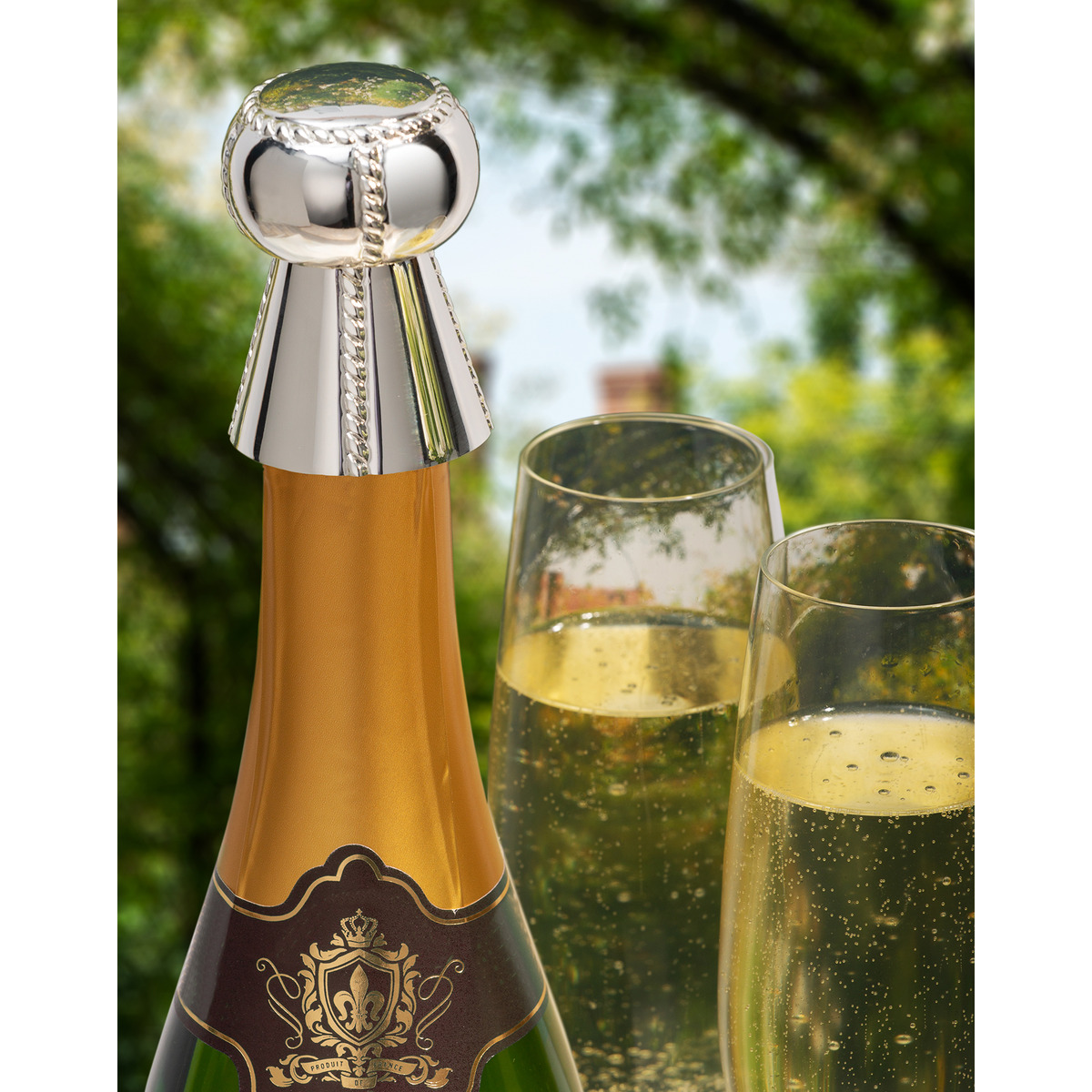
What features ensure a secure champagne bottle seal?
A reliable champagne stopper uses mechanical clamps and food-safe materials to form a dependable seal. Metal wings or hinged clips apply pressure evenly around the rim, preventing it from slipping off while the bottle is in the fridge. A silicone gasket conforms to any minor imperfections in the glass, locking in the carbonation so you can preserve champagne for up to a week.
- Metal wings or hinged clips: These grip the bottle’s lip securely, resisting any pops or leaks, even if the bottle is moved or stored on its side.
- Food-grade silicone gasket: Typically 3–5 mm thick, it stays flexible at refrigerator temperatures (4–8 °C) and prevents tiny, gradual leaks.
- Pressure rating ≥ 5 bar: This matches the typical pressure found in sparkling wine, safeguarding against the seal failing.
- Universal fit design: Adjusts to fit standard 750 ml champagne bottles without the need for any extra adapters.
When you’re trying a new stopper, press down firmly until it feels completely locked in place; this resistance is a sign that the gasket has formed a proper seal. A perfect seal maintains the internal pressure, keeping the bubbles vigorous and the wine tasting fresh between servings.
Which materials offer the best durability and safety?
Stainless steel bodies are highly resistant to corrosion, dents, and won’t impart any flavours to the wine. Chrome-plated finishes provide a sleek shine without sacrificing any strength. By pairing these durable exteriors with soft silicone gaskets, the wine only ever touches the inert silicone, perfectly protecting its aroma and taste. Well-constructed models support both casual drinkers and professionals in their wine preservation efforts.
Silicone stays flexible from room temperature down to chilly fridge levels, which prevents a slow leak of gas. Many high-end stoppers come with replaceable inner seals, allowing frequent hosts to simply swap out a worn gasket instead of buying a whole new unit. While hand-washing is gentlest on chrome-plated parts, most stainless steel bodies are durable enough for the top rack of a dishwasher.
How do I find the best value for my needs?
Align your purchase with how often you plan to use it and your budget. Casual drinkers can find reliable clamp stoppers for £5–15, while those who entertain frequently might prefer higher-end systems that include spare seals. Buying multipacks brings down the per-unit price and ensures you always have an extra champagne bottle stopper in stock for unexpected parties.
Always check the product specifications for CE marks, references to British Standards, and a warranty of at least one year. User reviews on sites like Amazon, Argos, or John Lewis often provide honest insights into real-world sealing performance, durability, and the truth behind wine preservation claims. It’s important to balance the initial cost with proven effectiveness and reliable customer service.
Where can I buy quality stoppers with reliable delivery?
Most major UK retailers list champagne stoppers on their websites, typically offering standard delivery within 3–5 working days, with faster options available. Be aware that some offers for free delivery may not include Northern Ireland, so always check the terms before you finalise your order to avoid extra charges. Also, confirm that the items are in stock to prevent any delays for your celebration.
Before completing your payment, review the returns policy. Many sellers offer no-quibble returns for unused items, though you might have to pay for return postage. Faulty products are generally eligible for a prepaid return label or collection. By verifying availability, delivery speed, and after-sales support, you can be confident you’re getting a champagne bottle stopper that meets your needs and arrives on time.
How Champagne Stoppers Preserve Your Sparkling Wine
To choose the right preservation method for any occasion, it helps to understand the basic principles. A pressure-retaining stopper forms an airtight seal to block oxygen from getting in while trapping the dissolved carbon dioxide inside. This keeps the bubbles and aromas bright and vibrant. If you seal your champagne bottle right away and store it upright in a cool refrigerator, you can successfully preserve your sparkling wine for about three to seven days.
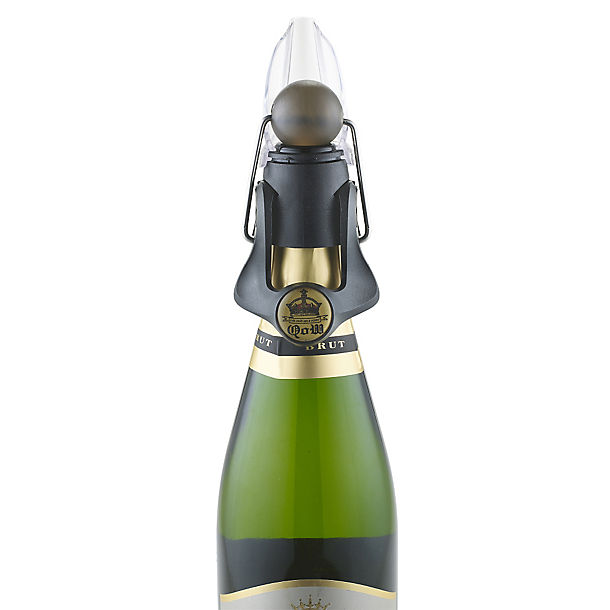
Do Champagne Stoppers Really Work to Keep Fizz?
Absolutely. When used properly, a high-quality champagne stopper effectively slows down oxidation, maintains internal pressure, and lets you savor your champagne over several days. People who reseal the bottle immediately after each pour and keep it chilled consistently report very little loss of fizz or fresh aroma.
Unlike vacuum pumps that actively pull dissolved CO₂ out of the wine, a stopper simply maintains the pressure already inside the bottle. Many designs feature metal clamps and flexible silicone gaskets that resist warping in the fridge, ensuring the seal remains tight and preventing micro-leaks that would slowly drain the bubbles.
Your technique still makes a big difference. A bottle left open will lose noticeable fizz within a day or two, while a promptly sealed and chilled champagne bottle retains its lively effervescence. After just 48 hours, the contrast is clear: the sealed prosecco or champagne still tastes vibrant, while the open one goes flat.
Why CO₂ Injection Outperforms Vacuum Pumps for Bubbles
CO₂ injection works by actively restoring lost pressure, which is a completely different approach from vacuum systems that remove gas. A blended cartridge—typically about 80% CO₂ and 20% nitrogen—enhances champagne preservation by both replenishing carbon dioxide and creating a protective layer that pushes oxygen away from the wine’s surface.
Standard vacuum pumps, like those from Vacu Vin, actually pull dissolved CO₂ out along with the air, often flattening your champagne or prosecco within a day. In comparison, trials show that a single five-second burst from a CO₂–N₂ cartridge can keep a 600 ml bottle effervescent for up to six days, making it far superior to any vacuum method.
This inert gas blend works equally well for Champagne, Prosecco, Cava, and Franciacorta without affecting the flavor. Common cartridge sizes are 21 ml or 27 ml, and you should always follow the manufacturer’s instructions. Once you’ve added the gas, seal the bottle immediately with an airtight stopper to lock in that protective blanket.
What Role Does an Airtight Seal Play in Preservation?
An airtight seal is crucial because it stops oxygen from getting back in and prevents precious carbon dioxide from escaping. This is what keeps the wine tasting fresh and lively. Some modern “Smart Caps” even have a clever feature: they automatically vent any excess pressure while still maintaining the perfect level of carbonation without breaking the seal.
Remember, even a tiny leak can undo the benefits of gas treatment in a matter of hours. Always press down on the stopper to make sure it feels firm and secure. For best results, store the bottle upright in a refrigerator set between 4–8 °C; the cooler temperature slows down gas diffusion, helping the seal effectively preserve your champagne for five to seven days.
| Preservation Method | Carbonation Retention | Expected Duration | Best For |
| Simple Rubber Stopper | Minimal | Few hours to 1 day | Very short-term use only |
| Clamp-Style Pressure Stopper | Good | 3–5 days | Home entertaining |
| Vacuum Pump System | Poor (removes CO₂) | 1 day maximum | Still wines only |
| CO₂–N₂ Injection with Smart Cap | Excellent | 5–7 days | Optimal sparkling preservation |
How Long Can a Sealed Champagne Bottle Stay Fresh?
With the correct application of a CO₂–N₂ cartridge and a reliable champagne stopper, your champagne can stay aromatic and fully fizzy for about five to seven days. This assumes you reseal it quickly after each pour, store it upright, and keep it at a steady fridge temperature of 4–8 °C. Some very careful users even report good quality stretching into the second week.
If left open, a bottle will start to lose its fizz within 24–48 hours and soon taste dull. If you only have about a quarter of the bottle left, it’s a good idea to transfer the remaining wine into a smaller, rigid container to minimize the air space before using your champagne stopper. Too much air speeds up both oxidation and bubble loss, no matter how good your seal is.
For storage longer than a week, consider transferring the wine to smaller bottles or using professional gas-control systems like those found in bars. While most people at home won’t need protection for that long, it’s useful to know these options exist for unexpected situations, ensuring you can always preserve sparkling wine at its best.
Types of Champagne Stoppers and Their Benefits
The market offers a variety of champagne stopper types, each designed to fit different budgets and drinking habits. By comparing simple clamps, twist-on caps, and gas-injection devices, you can find a preservation system that matches your entertaining style and keeps every bottle fresh. Choosing among these champagne stopper types involves weighing the upfront cost against preservation time, ease of use, and the long-term quality of your wine.
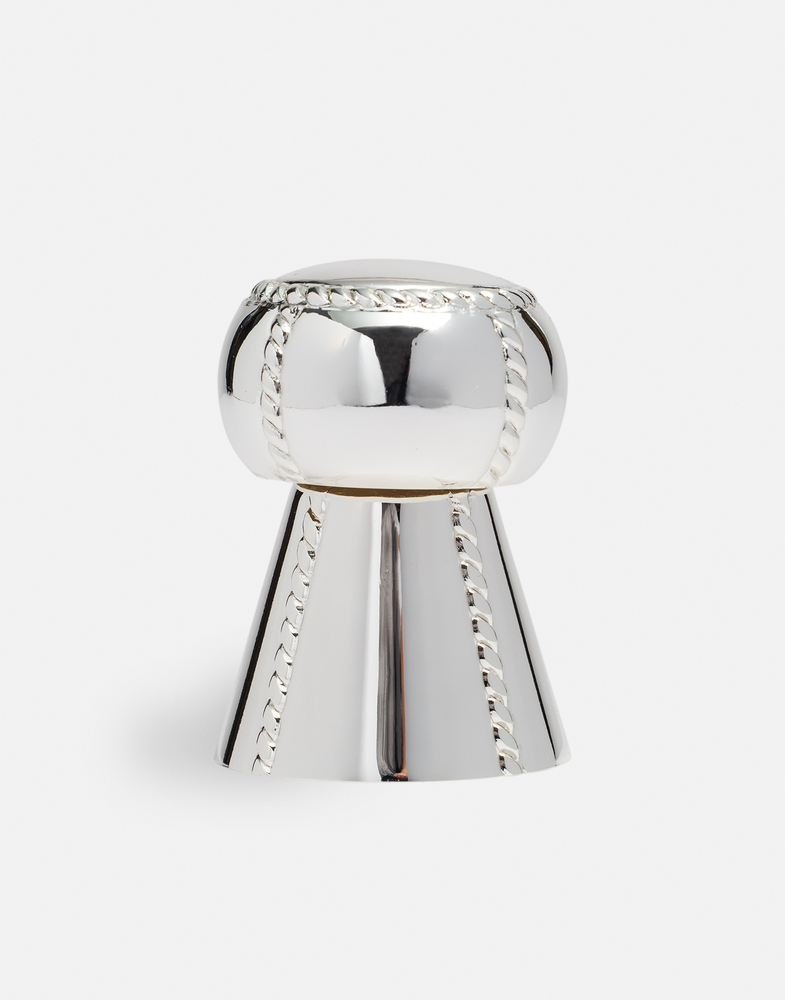
Which Is the Best Champagne Stopper for Home Use?
For most households, clamp-style pressure stoppers offer the best balance of price, reliability, and convenience. Metal wings lock over the bottle’s rim, creating a reliable airtight seal that preserves carbonation for three to five days without the need for pumps or cartridges. This allows you to quickly reseal a bottle after each pour.
Twist-on metal caps with silicone linings provide another user-friendly option. Their threaded design stands up well to champagne bottle pressure, fits neatly in refrigerator doors, and stores easily in kitchen drawers thanks to a low profile of just 3.4 cm.
When Should You Choose a CO₂ Injection System?
Frequent hosts or those who prefer drinking by the glass will benefit from CO₂ injection units, which keep sparkling wine preservation at its peak for a full week. A quick five-second burst of a special gas blend—80% CO₂ and 20% nitrogen—replenishes the internal pressure. A smart cap then seals the bottle to maintain the fizz.
Many professionals favor these systems because the advanced caps automatically release excess gas, ensuring consistent carbonation and flavor across multiple servings. If you’re looking for a champagne stopper that delivers bar-quality results at home, upgrading to a CO₂–N₂ kit is a logical choice.
Are Vacuum Pumps Effective for Preserving Champagne Bubbles?
Vacuum pumps are not suitable for sparkling wine preservation because they remove both oxygen and dissolved CO₂. This process flattens the drink within a day. While they are excellent for still wine preservation, the pressure drop they cause accelerates bubble loss and leaves the wine tasting dull.
Needle-access tools designed for still wines suffer from the same drawback unless they are specially re-engineered for pressure. Specialized versions like the Coravin Sparkling exist but remain quite costly for occasional home use.
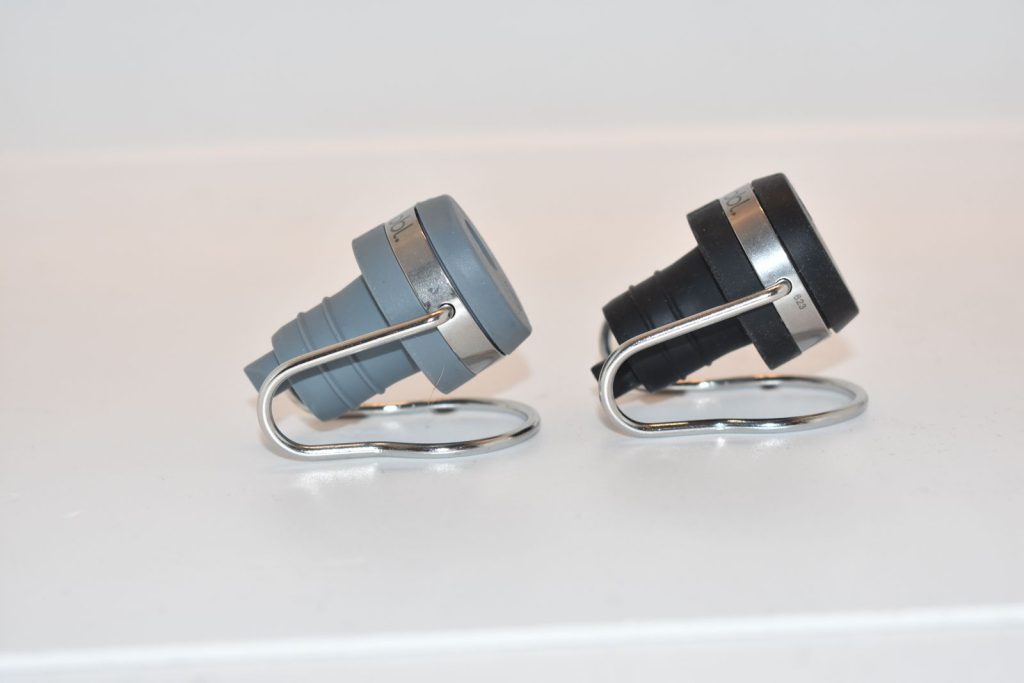
What Alternatives Exist to Traditional Champagne Stoppers?
Several complementary methods can help preserve sparkling wine when a standard stopper isn’t available. Dedicated pressure devices, refrigerated dispensers, or even decanting into smaller bottles each offer unique advantages, allowing you to tailor your preservation strategy to the situation.
- Dedicated sparkling devices: Systems like Coravin Sparkling combine regulated pressure with compatible stoppers, giving collectors premium control over carbonation.
- Commercial refrigerated dispensers: These hospitality units use precise gas blends and temperature control to preserve multiple bottles at once, ideal for by-the-glass service.
- Transfer to smaller bottles: Pouring the wine into a rigid, half-filled container minimizes headspace and slows CO₂ loss, all without needing any specialized gear.
If you don’t have a stopper on hand, you can tightly wrap the bottle opening with plastic film and secure it with a rubber band. This can slow CO₂ escape for a few hours. However, this method is only a short-term emergency fix. For true sparkling wine preservation, investing in a reliable mechanical or gas-injection stopper remains the best way to keep your wine fresh and protect your investment.
Practical Tips for Using Champagne Stoppers Effectively
Mastering a good technique turns a basic stopper into a powerful tool for protecting your wine’s flavor and bubbles. How you handle the bottle the moment you open it directly impacts how long the wine stays fresh, lively, and aromatic. Follow these simple guidelines to make every opening a smart step in your ongoing wine preservation routine.
How Do You Properly Seal a Champagne Bottle?
First, wipe the bottle’s rim with a soft cloth to make sure no dust, cork pieces, or spilled wine get in the way of a tight seal and pressure retention. Next, insert the champagne stopper and press down firmly until you hear a click. This indicates that both clips are fully engaged and the internal seal has expanded completely. Finish by giving the top a light tap – a firm, secure feel confirms that the stainless steel spring and silicone gasket are locked into place.
- Clean the rim thoroughly: Remove any tiny particles that could break the airtight seal and cause the champagne to go flat.
- Press until it clicks: Make sure both clips are engaged so the stopper sits evenly against the neck for maximum efficiency – a core champagne storage tip.
- Test the seal: Gently push the top; resistance means you’ve achieved dependable pressure control for extended wine preservation.
- Store immediately: Place the sealed bottle upright in the refrigerator so it starts cooling right away and slows down gas loss.
After sealing, put the champagne bottle in the fridge immediately. The cold temperature reduces gas escape and slows oxidation. Storing it upright minimizes the wine’s surface area exposed to air, helping the stainless steel mechanism maintain pressure longer. This simple habit helps preserve aroma, fizz, and flavor for several enjoyable days.
What Storage Conditions Maximize Champagne Freshness After Opening?
Keep the sealed bottle between 4°C and 8°C, which is the standard temperature range of most household refrigerators. Colder temperatures slow down carbon dioxide loss through the seal and hinder chemical reactions that diminish delicate flavors. Never leave an opened champagne bottle on the countertop – warmth quickly reverses all the benefits your stopper provides.
Always store bottles upright so that the wine comes into contact with as little air as possible inside the neck, and the gasket maintains even pressure. Avoid temperature fluctuations, as repeated expansion and contraction can weaken both the steel clips and silicone seals, eventually causing tiny leaks. Adopting a consistent wine preservation routine like this ensures every glass tastes as vibrant as the first.
How Often Should You Replace Stopper Seals and Gaskets?
Check silicone rings regularly – if you notice cracking, flattening, or dullness, it means the material has lost its flexibility and needs to be replaced. Some premium models come with removable inner seals, allowing for easy replacement that restores performance without buying a whole new stopper. Most home users notice wear after 50 to 100 uses, so it’s a good idea to keep spare gaskets on hand.
Before each use, press the top lightly. If it feels soft or spongy, the seal is weakening and might fail during storage. Hand-washing your stopper helps prolong its life by protecting the finish and preventing detergent residue from damaging the rubber. Although stainless steel bodies are usually dishwasher-safe (top rack only), avoid abrasive pads, as scratched steel or silicone can lead to slow leaks that flatten your champagne overnight.
Does the Teaspoon Trick Really Work for Champagne?
There is no scientific evidence to support the popular spoon myth – a spoon hanging in the bottle neck cannot create an airtight barrier or preserve carbonation. Champagne stored this way loses its fizz almost as quickly as an open bottle, wasting both your effort and expensive wine. For reliable wine preservation, trust an engineered stopper, not kitchen folklore.
This misconception might come from confusion with how bubbles form in chilled glasses, which has nothing to do with sealing a bottle. Only an airtight device with a compression gasket and a sturdy stainless steel frame can maintain internal pressure. Ignore the spoon advice completely and reach for a purpose-built champagne stopper whenever freshness is important.
You can buy a reliable clamp-style stainless steel stopper for less than the price of a mid-range bottle of champagne. This small investment gives you multiple days of bright, lively flavor instead of disappointing flatness within hours. Choose proven engineering, protect every pour, and enjoy consistent quality without waste.
Frequently Asked Questions
Do champagne stoppers really work?
Yes, a high-quality champagne stopper creates an airtight seal that effectively traps carbon dioxide inside the bottle. When you store the sealed bottle upright in a refrigerator set between 4–8 °C, the bubbles and subtle aromas remain fresh for up to a week. Without this proper seal, an open bottle typically goes flat and begins to oxidize within just one to two days.
Which is the best champagne stopper?
The ideal champagne stopper for you depends largely on how often you enjoy sparkling wine. Casual drinkers often prefer clamp-style pressure stoppers, which are affordable (around £10) and can keep your wine fresh for five to seven days. For those who entertain frequently or are wine professionals, investing in a cartridge system—such as the Coravin Sparkling—offers advanced pressure regulation and can extend preservation well beyond a single week.
What can I use instead of a champagne stopper?
In a pinch, you can tightly cover the bottle’s mouth with plastic wrap secured by a rubber band. This makeshift solution might slow down gas escape for a few hours, but it cannot maintain the internal pressure needed for true preservation, so the wine will still lose its effervescence and freshness rapidly. Contrary to popular belief, placing a teaspoon in the neck does nothing to help—only a purpose-built champagne stopper can genuinely preserve your wine.