
Table of Contents
What are low sulphite and sulphite free wines
All wines contain some naturally occurring sulphites from fermentation, but there’s a significant difference in the amount of sulphur dioxide added between commercial and artisanal wines. Learning the differences between low-sulphite, no added sulphur, and truly sulphite-free wines allows you to select bottles that align with both your health considerations and taste preferences.
Understanding natural sulphite levels in all wines
The fermentation process, where yeasts convert grape sugars into alcohol, naturally produces about 10–20 mg/L of sulphur dioxide – meaning no wine can ever be entirely sulphite free. Discover the science behind low‑sulphite wines to understand how natural SO₂ develops and why limited additions remain standard practice. While sulfite drops for wine can reduce exposure for sensitive individuals, they can’t eliminate the sulphites produced during fermentation.
Commercial wineries may add up to 200 mg/L of sulphur to prevent oxidation, whereas natural wine producers typically keep total sulphites below 50 mg/L. This minimalist approach allows the true expression of the grape and its origin to shine through, rather than being obscured by excessive sulfur dioxide and artificial preservatives.
Legal limits and labelling requirements across regions
European regulations limit sulphites to 150 mg/L for red wines, 200 mg/L for whites and rosés, and 400 mg/L for sweet wines. However, certified organic wines must contain less than 100 mg/L for reds or 150 mg/L for whites, and any wine exceeding 10 mg/L must declare “Contains sulphites” on the label. While a sulfite removing wine filter can help reduce intake, it should complement rather than replace medical advice for those with sensitivities.
- EU regulations: 150 mg/L limit for reds, 200 mg/L for whites/rosés, 400 mg/L for dessert wines – with mandatory labeling above 10 mg/L
- Organic certification: Stricter limits of 100 mg/L (red) or 150 mg/L (white), ensuring more natural winemaking compared to conventional production
- Global differences: Countries like the US, Canada and Australia set their own standards, often allowing up to 350 mg/L in mainstream wines
Since precise sulphite levels rarely appear on labels, consumers must look for certification marks and trust wineries that are transparent about their sulphur level. Producers who voluntarily disclose their amount of sulphites demonstrate a commitment to minimal intervention and consumer health.
The term “low sulphite” can mean different things in different regions – a French wine with this label may contain a different sulphur level than a similarly labeled California wine. Understanding these regulatory variations helps you better compare sulphites in wine across different countries and select bottles that match your personal tolerance level.
Health considerations for sulphite sensitive drinkers
While most people tolerate sulphites well, a small percentage experience reactions ranging from mild headaches or skin irritation to more serious asthma attacks or low blood pressure. Some individuals notice symptoms at just 5 mg/L, making natural wine or organic wines with no added sulphur particularly appealing alternatives.
The Acceptable Daily Intake of sulphur dioxide is 0–0.7 mg per kilogram of body weight – a threshold rarely reached through normal wine consumption. Opting for natural, low-intervention wines reduces your overall sulphur level intake and may help prevent those morning-after headaches sometimes mistakenly attributed to alcohol when added sulphites might actually be the cause.
How organic and no added sulphur wines are produced
Small-scale winemakers follow traditional methods and careful vineyard management to create wines with minimal chemical intervention. Biodynamic farming and spontaneous fermentation using natural yeasts help preserve the wine’s inherent antioxidants, allowing the true expression of the grape while preventing oxidation.

Low intervention winemaking techniques and natural methods
Organic wines typically come from vineyards that avoid synthetic pesticides, where healthy soils produce naturally resilient vines. During fermentation, winemakers rely on native yeasts found on grape skins rather than commercial strains, eliminating the need for added sulphites or other additives.
- Wild yeast fermentation: Natural yeasts develop complex flavors while reducing reliance on sulphur dioxide for preservation.
- Gentle filtration: Minimal processing maintains protective compounds that naturally prevent oxidation and decrease the need for added sulphites.
- Temperature control: Cool, stable fermentation temperatures help maintain balanced acidity without requiring sulphur additions.
- Protective gas use: Noble gases like argon create a protective barrier during wine transfers, reducing oxygen exposure and sulphur requirements.
Working with small batches allows winemakers to closely monitor each barrel, adjusting aging to achieve natural stability. Unlike large commercial operations that depend on higher sulphur levels to protect mass-produced red wines and white blends during distribution, these careful methods produce authentic natural wines.
Innovative techniques like vacuum sealing at bottling extend shelf life while maintaining “no added sulphur” status. Direct distribution from smaller producers also helps ensure these organic wines arrive in perfect condition when stored properly.
Regional styles and grape varieties for low sulphite wines
The antioxidants in grape skins mean red wines typically require less sulphur dioxide than delicate whites. Varieties like Nero d’Avola, Garnacha, and Pinot Noir excel in no added sulphur winemaking, offering depth and structure without masking their natural character with additives.
The Loire Valley produces crisp Sauvignon Blanc with minimal sulphites, while Burgundy’s natural winemakers create smooth Pinot Noir through careful fermentation. Italy’s Piedmont region maintains its Nebbiolo and Barbera traditions with restrained sulphur use, and Spain offers vibrant Albariño and Tempranillo that showcase pure fruit flavors.
| Region | Grape variety | Typical style | Sulphite level |
| Loire Valley, France | Sauvignon Blanc | Crisp, mineral white | 20-40 mg/L |
| Burgundy, France | Pinot Noir | Elegant, earthy red | 15-35 mg/L |
| Piedmont, Italy | Nebbiolo | Structured, tannic red | 25-45 mg/L |
| Rías Baixas, Spain | Albariño | Fresh, aromatic white | 20-40 mg/L |
| Sicily, Italy | Nero d’Avola | Bold, fruit-forward red | 15-30 mg/L |
Preserving and serving low sulphite wines at home
Once you’ve found your perfect low-sulphite bottle, proper storage becomes essential. With minimal added sulphites, these wines need extra care to maintain their delicate aromas and prevent oxidation after opening.

Why low sulphite wines require special preservation
Reduced sulphite levels mean these wines lose their flavor faster when exposed to air. While drops for wine sulphites can lower sulphite content in traditional wines, they don’t protect already opened natural wine from oxygen damage.
- Oxidation sensitivity: Without sufficient sulphur dioxide, oxygen quickly dulls the wine’s vibrant fruit characteristics.
- Microbial vulnerability: Low free sulphur leaves wine susceptible to spoilage organisms that ruin taste and aroma.
- Shorter drinking window: Most natural or biodynamic wines peak within three years, unlike conventional wines that age for decades.
- Temperature sensitivity: Heat accelerates deterioration, especially in wines without sulphite stabilization.
Standard storage methods only work temporarily, as trapped oxygen continues reacting with the wine. This frustrates natural wine enthusiasts who want to enjoy a single glass without compromising the winemaker’s intended expression.
Wikeeps inert gas technology for opened bottles
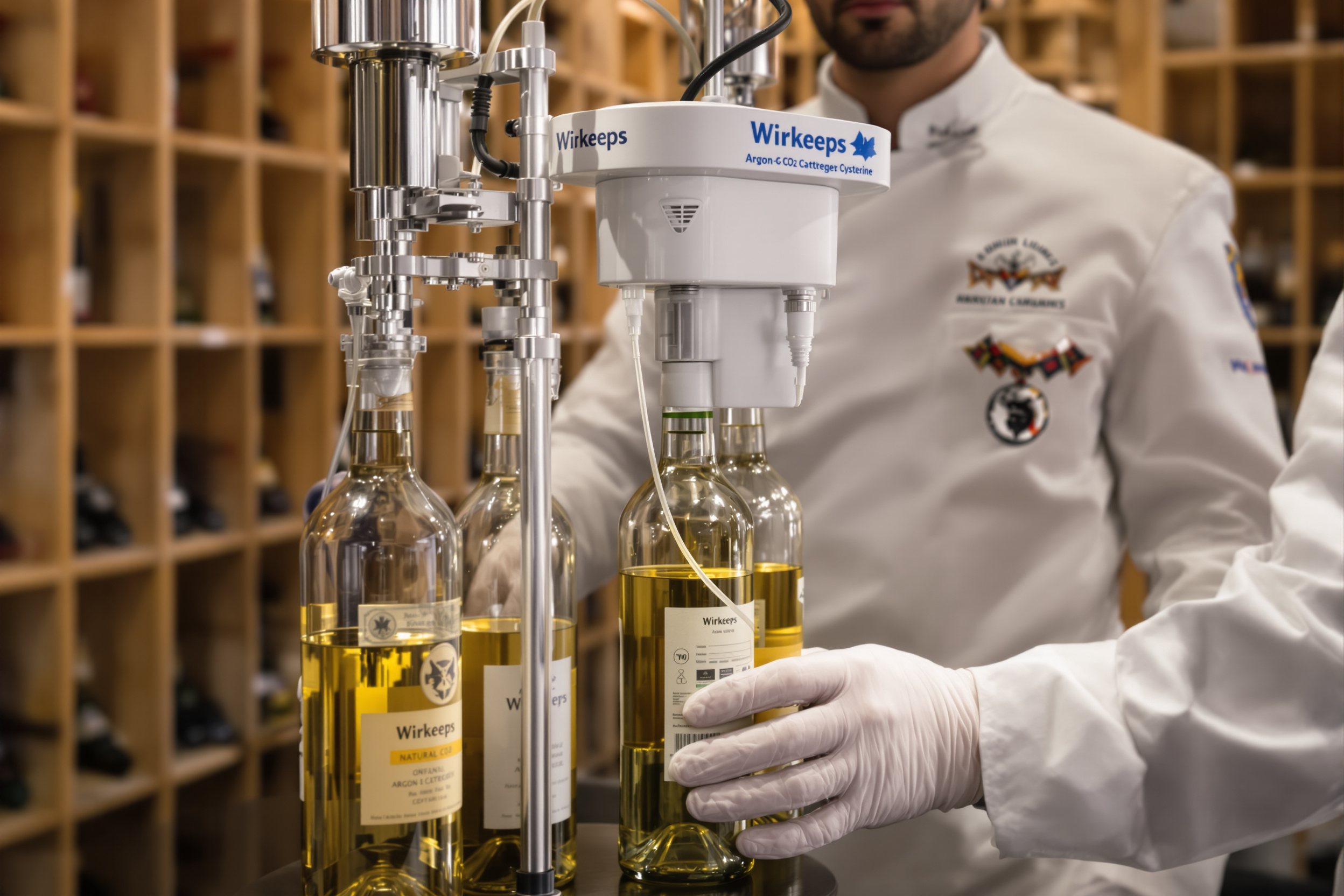
Our preservation system tackles these challenges with a patented three-step oxygen blocking process. Each cartridge contains a blend of 79% argon and 21% carbon dioxide, creating a protective layer that shields the wine’s surface.
- Argon barrier: This inert gas blanket prevents oxygen from reaching delicate flavor compounds, significantly slowing oxidation.
- CO₂ acidity support: The precise carbon dioxide dosage maintains natural acidity and microbial stability without affecting taste.
- Advanced filtration: Our dispensing system removes microbes and particles, extending the life of low-sulphite wine.
- Professional integration: Cartridges work with Coravin-style devices, allowing restaurants to serve biodynamic wines by the glass while keeping bottles sealed.
Test results were impressive: a low-sulphite Pinot Noir preserved with our system maintained its fruit character for thirty days, while conventionally stored bottles began deteriorating within two days. This innovation makes preserving low sulphite wines practical for everyday enjoyment.
Storage solutions and accessories for optimal freshness
Additional tools help maintain quality from store to glass. Our instant-seal corks protect opened bottles, while adjustable pour spouts allow controlled aeration without excessive oxygen exposure.
Compact wine coolers maintain the ideal 12–18°C range, slowing chemical changes that affect low-sulphite wine. For sparkling natural wines, the Bubbl. system uses an 80% CO₂/20% nitrogen mix to preserve bubbles and aroma for more than a week.
Frequently Asked Questions
Which wine is lowest in sulfites?
Red wines typically contain the lowest sulfite levels since their natural tannins help preserve them during winemaking and aging. Look for organic or biodynamic wines labeled “no added sulfites”; brands like Meinklang, Giol, or Bodegas Latue often keep their total sulfite level below 30 mg/L. To ensure minimal sulfites, check for phrases like “no sulfites added” or “minimal free sulfites” on natural wine bottles.
What are the benefits of low-sulfite wine?
Wines with reduced sulfites offer a purer taste, allowing the true character of the grape and its terroir to shine through without interference from additives. Many drinkers sensitive to conventional wines with added sulfites experience fewer headaches with these options. Plus, choosing biodynamic or organic producers who practice no-sulfite-added winemaking helps maintain sustainable farming traditions and protects vineyard ecosystems.
What alcohol has the lowest sulfites?
Among alcoholic beverages, natural red wines generally have fewer sulfites than white wines or beer, thanks to their grape skins’natural preservatives. While spirits like vodka contain negligible sulfites, they lack wine’s complex flavors and biodynamic qualities. For the absolute lowest sulfite level, opt for certified organic or biodynamic wines explicitly labeled “no sulfites added” with free sulfites under 25 mg/L.