
Table of Contents
- I. Understanding the ideal champagne storage temperature range
- II. Best practices for storing and serving champagne at optimal temperature
- III. How Proper Champagne Storage Temperature Preserves Wine Quality
- IV. Different Champagne Types and Their Ideal Serving Temperatures
- V. Wine storage equipment: choosing the right cellar for champagne bottles
- VI. Caring for opened champagne bottles
- Conclusion
- Frequently Asked Questions
Champagne is one of the world’s greatest pleasures and a symbol of celebration, but storing champagne at the correct temperature is essential to preserve its subtle aromas and flavors. The storage temperature directly impacts the taste and quality of your wine, making proper champagne storage a critical consideration for any enthusiast.
In this guide, we’ll explain how to keep champagne at the right temperature and share essential tips for serving it at its best. We’ll explore the different types of champagne and their ideal serving temperatures, examine the advantages of proper storage, and introduce the equipment you need to maintain optimal temperature. By the end, you’ll have everything needed to enjoy perfect champagne every time.
I. Understanding the ideal champagne storage temperature range
To store your champagne properly, it’s important to understand what temperature it needs. The ideal temperature for storing unopened champagne is between 5 and 7 degrees Celsius. This narrow range is crucial because champagne is a delicate sparkling wine that requires precise conditions.
Maintaining your champagne at this temperature preserves its aromas, effervescence, and freshness. Higher temperatures cause oxidation and flavor loss, while excessive heat triggers premature aging of the wine. At temperatures above 8°C, champagne begins to deteriorate, losing the crisp bubbles and complex flavors that make it special.
Store champagne in a dark room away from direct light exposure, as light can alter its color and aromatic complexity. In addition, keep bottles in a cool, dry place away from strong odors and humidity, which can damage cork integrity and bottle labels. Maintain a consistent ambient temperature without fluctuations, as temperature variations accelerate oxidation and degrade quality.
II. Best practices for storing and serving champagne at optimal temperature
Storing and serving champagne at the correct temperature is critical to ensuring its taste and freshness are preserved. The temperature at which you keep champagne has a direct influence on its overall quality. To fully enjoy your champagne, it is therefore essential to store and serve it correctly.
To preserve champagne properly, place bottles in a cool, constant environment, away from direct light and temperature fluctuations. The optimal storage temperature is between 5°C and 7°C for unopened champagne. A stable, cool temperature slows aging and preserves the wine’s freshness.
You can store champagne in a standard refrigerator for short periods only. Extended storage in a household fridge can alter its taste and quality, as these appliances lack the precise temperature control needed for proper wine preservation. For long-term storage, a dedicated wine cellar is recommended.
To serve champagne at its optimal temperature, remove it from the refrigerator approximately one hour before serving. The ideal serving temperature for most champagnes is between 8°C and 10°C. While serving at around 12°C is possible, it can slightly affect the taste and aroma profiles. Different champagne styles have specific temperature preferences—Brut and semi-dry varieties perform well at 8-10°C, while drier styles benefit from cooler serving temperatures of around 6-8°C.
It is important to note that the higher the serving temperature, the more the taste and aroma of the champagne will be affected.
To maintain the proper temperature during both storage and service, specialized equipment like champagne coolers, ice buckets, and wine cellars prove invaluable. These tools help keep your champagne bottles at a constant temperature, which is essential for preserving carbonation and aroma.
III. How Proper Champagne Storage Temperature Preserves Wine Quality
Champagne is a sparkling wine that must be kept at the right temperature to preserve its organoleptic properties and carbonation. At high temperatures, champagne loses bubbles and flavor, compromising both taste and quality.
Storing champagne at an optimal temperature preserves its taste and aromatic qualities intact. Properly stored champagne is softer, more aromatic, and fully develops its characteristic flavors. Cool storage also maintains the wine’s texture and freshness, making it more pleasant and digestible.
Keeping champagne at the right temperature extends its shelf life significantly. At a proper, constant temperature, champagne maintains its qualities for longer, allowing consumers to enjoy it at its peak for extended periods without degradation.
Finally, proper storage of champagne is also important for its visual appearance. A well-preserved champagne is brighter and more brilliant, which makes it a more attractive product and creates a desire to taste it.
IV. Different Champagne Types and Their Ideal Serving Temperatures
Champagne production is regulated to the Champagne region of France. Different champagne styles require specific serving temperatures to maximize their characteristics.
Champagne Brut is the most popular type of champagne and is served at a temperature between 8 and 10 degrees Celsius. This temperature allows the drink to retain its taste and aroma.
Semi-dry champagne is also served at 8-10°C but is sweeter than brut champagne and is usually served with desserts or sweet dishes.
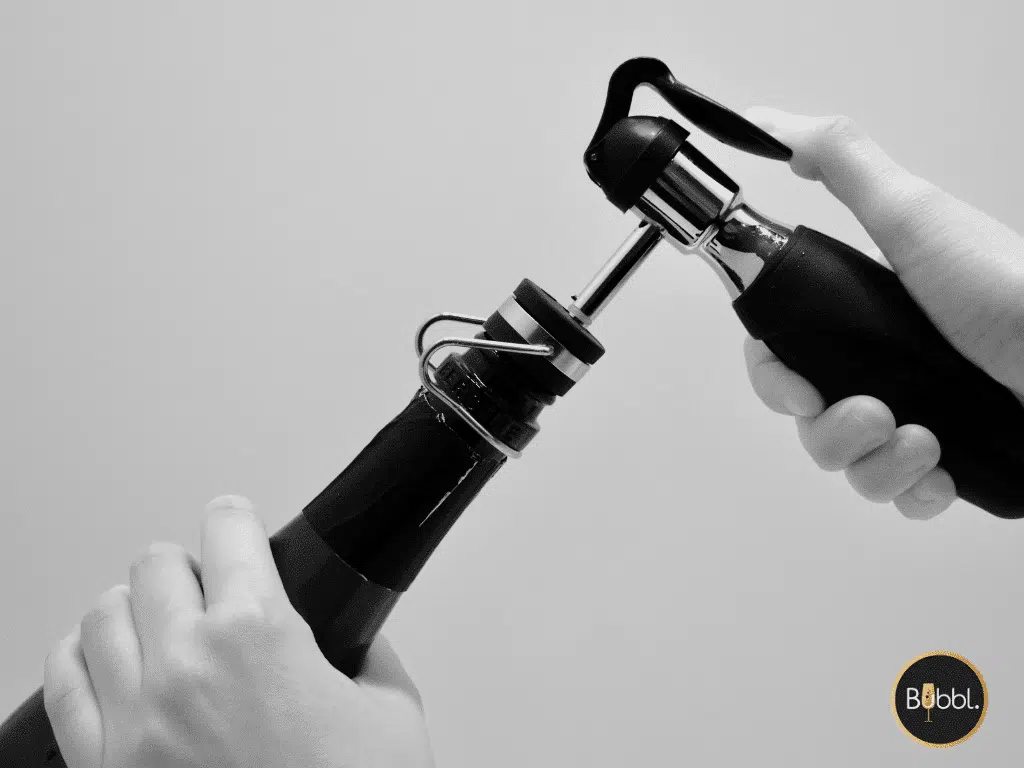
Discover sparkling preservation system : BUBBL.
Dry champagne is served at 6-8 degrees Celsius. It is perfect for accompanying salty dishes and apéritifs and provides a crisp, refreshing experience.
Rosé champagne is also served at 6-8°C and is very fruity, making it perfect for accompanying light meals and summer occasions.
Finally, extra-brut champagne, the driest style, is served at 4-6°C (the coldest option). It is perfect for accompanying cheeses and fresh seafood, where its extreme dryness complements mineral and savory flavors.
It is important to serve champagne at the right temperature to get the most out of it. By choosing the right type of champagne and keeping it at the right temperature, you can enjoy a unique and tasty drink.
V. Wine storage equipment: choosing the right cellar for champagne bottles
Wine storage equipment is essential for maintaining a consistent champagne storage temperature. Most experts recommend storing champagne between 8-12°C for stable conditions, though dedicated wine cellars can achieve even more precise control.
The first device to use for storing champagne is the wine fridge. Wine fridges maintain a stable, constant temperature without the fluctuations that can damage champagne. Multiple temperature compartments allow you to store champagne at 9°C while keeping other wines at different temperatures. Glass doors protect bottles from light exposure.
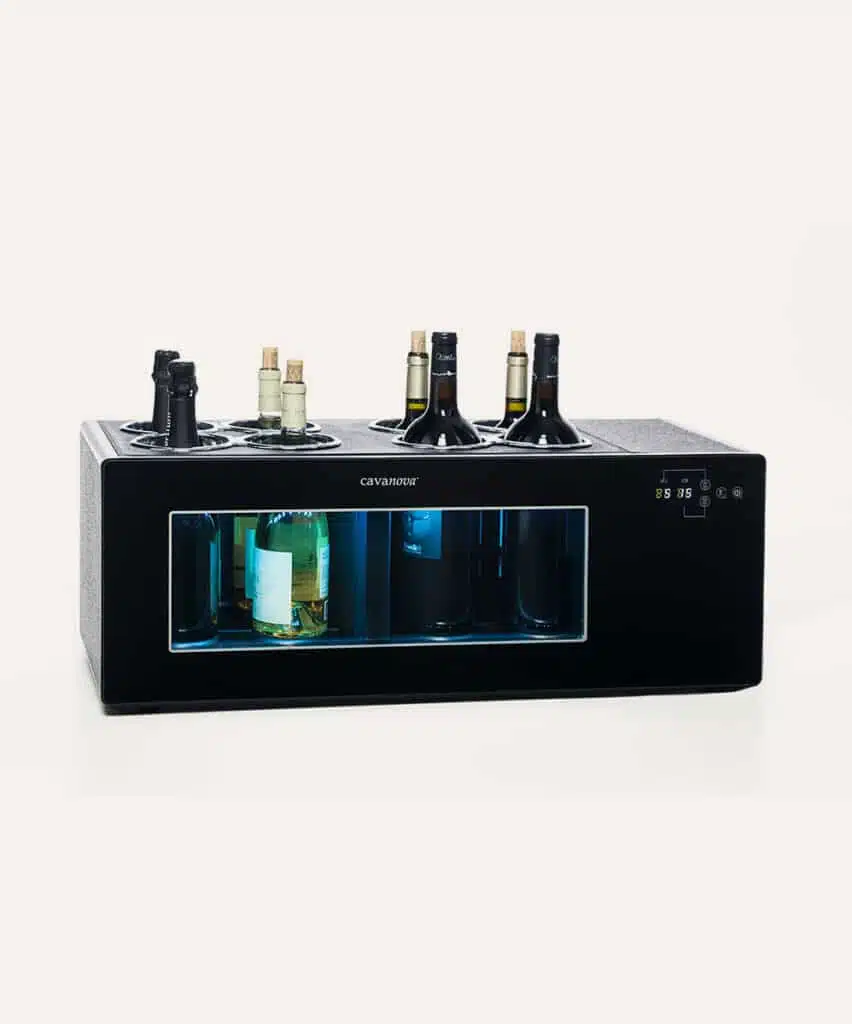
Buy countertop wine cellar Wikeeps
A dedicated wine cellar maintains a constant, stable temperature ideal for champagne storage and aging. Adjustable temperature controls allow for precise champagne storage temperature settings. Cellars prevent temperature fluctuations that accelerate oxidation and preserve wine quality long-term. The compact countertop wine cellar features independent temperature zones (5-18°C range), allowing you to maintain champagne storage temperature around 9°C in one compartment while storing reds separately. Its compressor cooling ensures stable conditions regardless of ambient temperature variations.
In short, there are several pieces of equipment that can be used to store champagne at the right temperature. Wine fridges, wine cellars, and dedicated champagne coolers are all effective for keeping your champagne bottles at the correct temperature and ensuring their long-term preservation.
VI. Caring for opened champagne bottles
For opened champagne bottles, maintaining a cool temperature below 10°C is crucial for preservation. The Smart Cap system recommends keeping opened bottles in an ice bucket or cooler and storing them upright to preserve bubbles and aroma for up to a week. For wine professionals serving champagne by the glass, a French-engineered champagne cooling system combines preservation technology with a stainless-steel cooling module that maintains champagne at roughly 10°C for 5-6 hours, preserving bubbles and aroma while serving multiple glasses.
Conclusion
Storing champagne at the proper temperature is essential to preserve taste, aroma, and quality. Understanding the ideal storage temperature for each champagne type and having appropriate wine storage equipment ensures you enjoy champagne at its best. Proper champagne storage temperature calls for consistent, cool conditions typically around 10°C (50°F). Maintaining this stable, cool and constant environment slows chemical reactions and preserves wine freshness, while avoiding champagne storage temperature variations that accelerate oxidation. With proper conditions and equipment, your champagne bottles will maintain their characteristics for optimal enjoyment.
Frequently Asked Questions
Should you store champagne in the fridge?
Refrigerator storage is suitable only for short-term champagne preservation, typically a few weeks before serving. Standard fridges lack precise temperature control and can alter taste quality over time. For proper long-term champagne storage, use a dedicated wine cellar or champagne cooler that maintains a constant, cool temperature between 5-8°C.
What is the ideal champagne storage temperature?
The optimal storage temperature for unopened champagne bottles is between 5 and 7°C, with an acceptable range of 4-8°C. This cool, constant temperature preserves the wine’s carbonation, aroma, and freshness while preventing oxidation and premature aging. Avoid temperature fluctuations and keep bottles away from light exposure and humidity.
How should you serve opened champagne bottles?
Opened champagne bottles should be stored upright at temperatures below 10°C using an ice bucket or cooler. A smart preservation system like the Smart Cap can maintain freshness for up to a week. Remove champagne from cold storage approximately one hour before serving to reach the ideal serving temperature of 8-10°C for most styles.